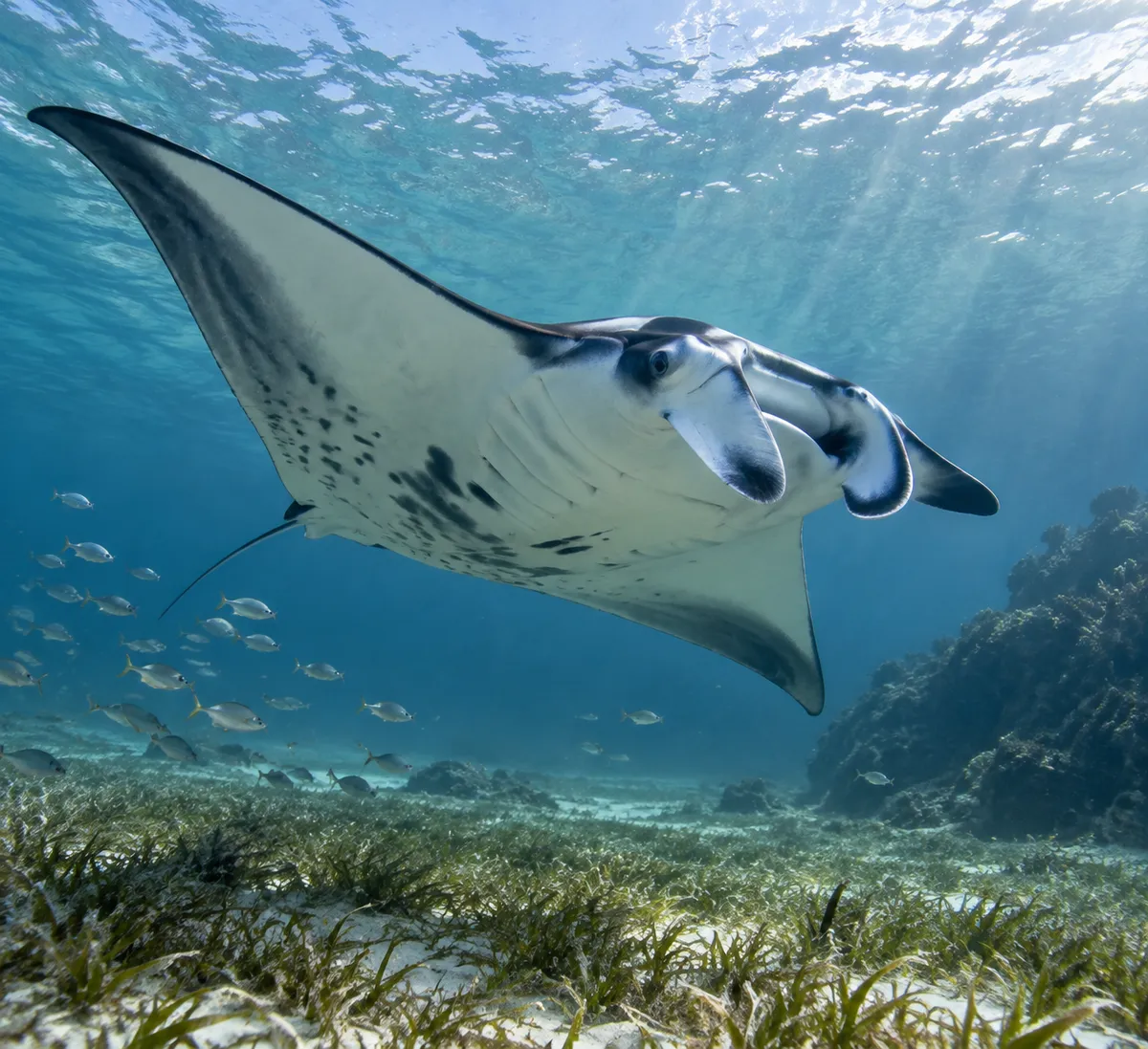
A giant manta ray can reach nine meters (30 feet) long, with a disk up to seven meters (23 feet) across, and weigh as much as 2,000 kg (4,400 pounds). At that size, as Phys notes in its report, adults have very few natural enemies. So where do the young ones learn to live? A new study from Central America, reported by Phys, points to a simple answer: close to shore, tucked into shallow coastal refuges, until they're big enough to face the open ocean.
By the end of this article, you'll know why baby mantas hug the coast, how that changes once they grow, and why that shift matters for protecting them.
Baby mantas start in coastal refuges
Per the Phys report, the study found that young giant manta rays remain in shallow coastal areas until they are large enough to survive open-ocean predators.
Think of it as a nursery. A newborn manta is a tiny version of an animal that will one day have almost nothing hunting it. But while it's small, the open ocean is a risky place. Staying in the shallows is a way to buy time and grow.
The key idea is that safety for a manta changes with size. The same open water that is fine for a multi-ton adult is dangerous for a youngster.
The giants have few enemies, but the young do not
That contrast is the surprising part. Giant mantas are among the biggest rays in the sea. Their size gives adults very few natural enemies, according to the Phys description of the research.
So the danger to a baby isn't a permanent feature of being a manta. It's a stage. Picture a long, slow race to outgrow your predators, run in calm coastal water where you can feed and get bigger before leaving.
Adults leave, and the risks change
Once mantas grow, their lives look very different. Per the report, adults make long-distance migrations. That freedom comes with a catch: their travels expose them to fishing and vessel risks outside protected zones.
In other words, the threat flips. Young mantas face natural predators, which is why they stay close to the coast. Adults have outgrown that problem, but they now face human activity as they roam.
Why a protected patch of ocean isn't enough
A marine reserve works well for an animal that stays put. For an animal that travels across a long stretch of ocean, it only covers part of the journey.
That's the conservation problem this study speaks to. Phys reports that the findings arrive as conservationists push beyond isolated marine reserves toward connected protections for migratory species. A manta might be safe in a nursery, then meet fishing gear or ship traffic once it leaves.
The report also says that as ocean traffic and industrial fishing expand, manta "highways" across national borders are becoming a conservation priority. Because those routes cross borders, protecting them would take more than one country acting alone. The idea of connected, multinational corridors, sometimes described as conservation swimways, follows from that.
What the nursery story suggests
This part is my take rather than a finding from the study: the pattern implies that protecting only one stage of life leaves gaps. Safeguarding nurseries helps the young reach adulthood, but those survivors still have to get through a world of nets and boats.
A full picture of protection would need to cover both the shallow places where mantas grow up and the long routes they travel afterward.
What you can take from this
Next time you see a photo of a huge manta gliding through open water, remember it likely spent its early life hugging a coastline. If you care about ocean wildlife, look for conservation efforts that protect connected habitats and migration routes, not just single zones. For animals that start small and end up crossing oceans, the whole journey needs protecting.