Mysterious sightings near Mount Rainier continue to baffle the public, according to a recent SFGATE report. The coverage frames the area as a recurring hotspot for unexplained phenomena and local speculation. This article won't try to tell you what people saw, because the reporting summary I have doesn't include specific sighting details. What it can do is answer a better question: why do certain places, Rainier included, become magnets for unexplained stories? By the end, you'll have a simple toolkit for judging any strange-sky tale.
Why a mountain becomes a mystery magnet
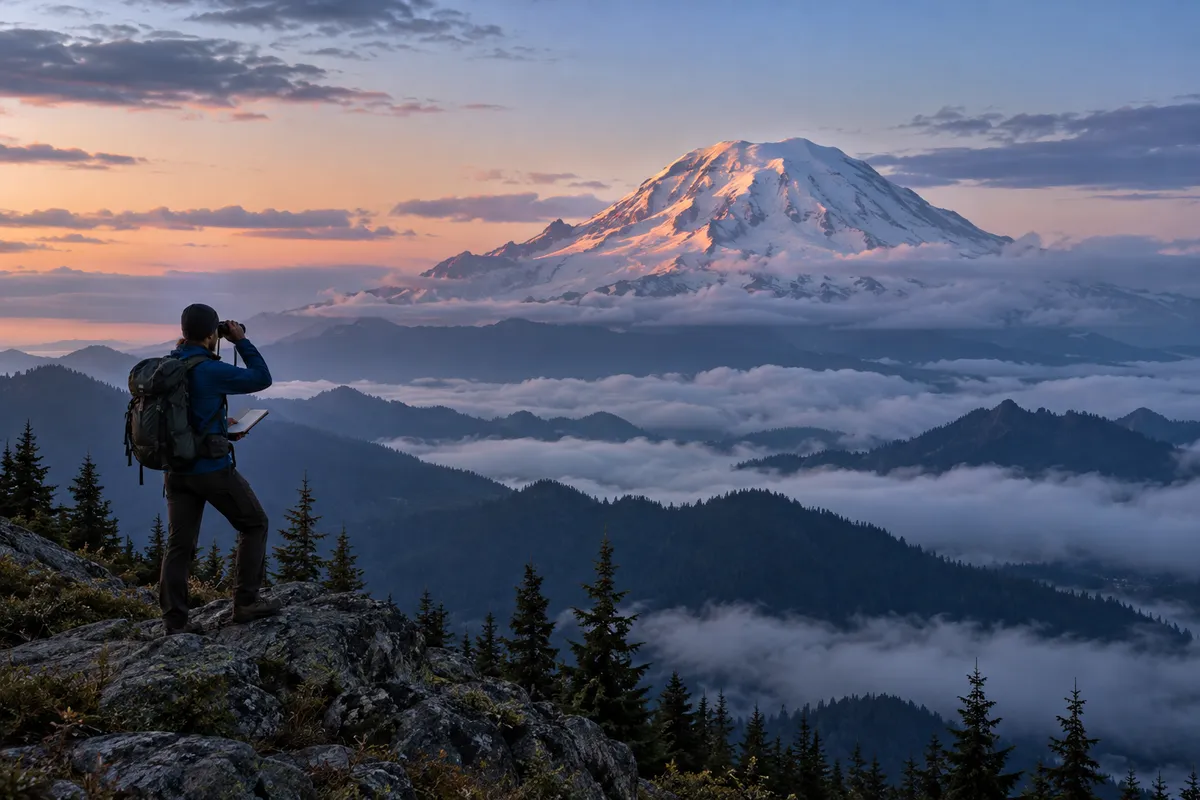
The SFGATE piece points to Mount Rainier's iconic status as part of what makes the mystery feel both accessible and cinematic. That's a useful clue. A few ingredients tend to make a place a legend factory, and the following explanations are my analysis rather than findings from the report.
1. It's famous, so people are already looking
A landmark that dominates the horizon draws cameras, hikers, and attention. More eyes on the sky and more phones in pockets means more chances that someone records something odd, whether or not it turns out to be strange.
2. It's easy to visit
A mystery you can drive to is more compelling than one in a remote desert. Outdoor travel and regional storytelling feed interest in unusual destinations, and each visitor can become a new witness, or a new storyteller.
3. Stories attract stories
Once a location has a reputation, people interpret ambiguous things through it. A light that would be forgotten elsewhere becomes "another Rainier sighting." The legend shapes what people notice and what they report.
The skeptic's toolkit: what could it be?
When a sighting baffles people, the useful move isn't to jump to the most exciting answer. It's to run through ordinary candidates first. These are general categories investigators commonly consider, offered here as a thinking aid and not as explanations for any specific Rainier report:
- Aircraft. Planes can look odd depending on angle, distance, and lighting.
- Weather and clouds. Mountains shape clouds in dramatic ways, and light can make them look solid or artificial.
- Celestial objects. Bright planets and stars can seem to hover or shimmer near a skyline.
- Drones and human-made lights. Modern hobby gear can behave in ways that look unfamiliar.
- Perception. Our brains fill in details, especially in low light, with no reference for distance or size.
None of these makes a witness foolish. It's simply that distance and size are very hard to judge in the sky, and a mountain backdrop can make that even trickier.
Lore versus evidence
Local lore and skeptical explanation aren't enemies. Lore tells you why people care about a place; evidence tells you what actually happened on a given night. The most satisfying way to read a story like this keeps both in view.
Here's a quick way to sort what you read:
- Who saw it, and who is reporting it? A firsthand account is different from a retelling.
- Is there a recording? A photo or video can be checked. A memory can't.
- Were ordinary explanations ruled out, or just ignored?
- Does the story get bigger each time it's told? Legends tend to grow.
What the Rainier story actually shows
The real fascination may be less about the sky and more about us. People are drawn to places that feel grand and a little unknowable, and a snow-capped peak towering over a region full of its own storytelling traditions fits that perfectly. The SFGATE report captures a public that remains curious, and that curiosity is the genuinely documented part.
If you go looking
If Rainier's reputation tempts you to plan a trip, treat it as a chance to practice good observation, not to hunt for proof. Note the time, direction, and weather. Record video with a landmark in frame so others can judge scale. Check a flight-tracking app and a night-sky app before deciding something is unexplained.
The next time a mysterious sighting makes headlines, ask what ordinary things could look like that, and then enjoy the story anyway. Doing both is how you stay curious without getting fooled.