
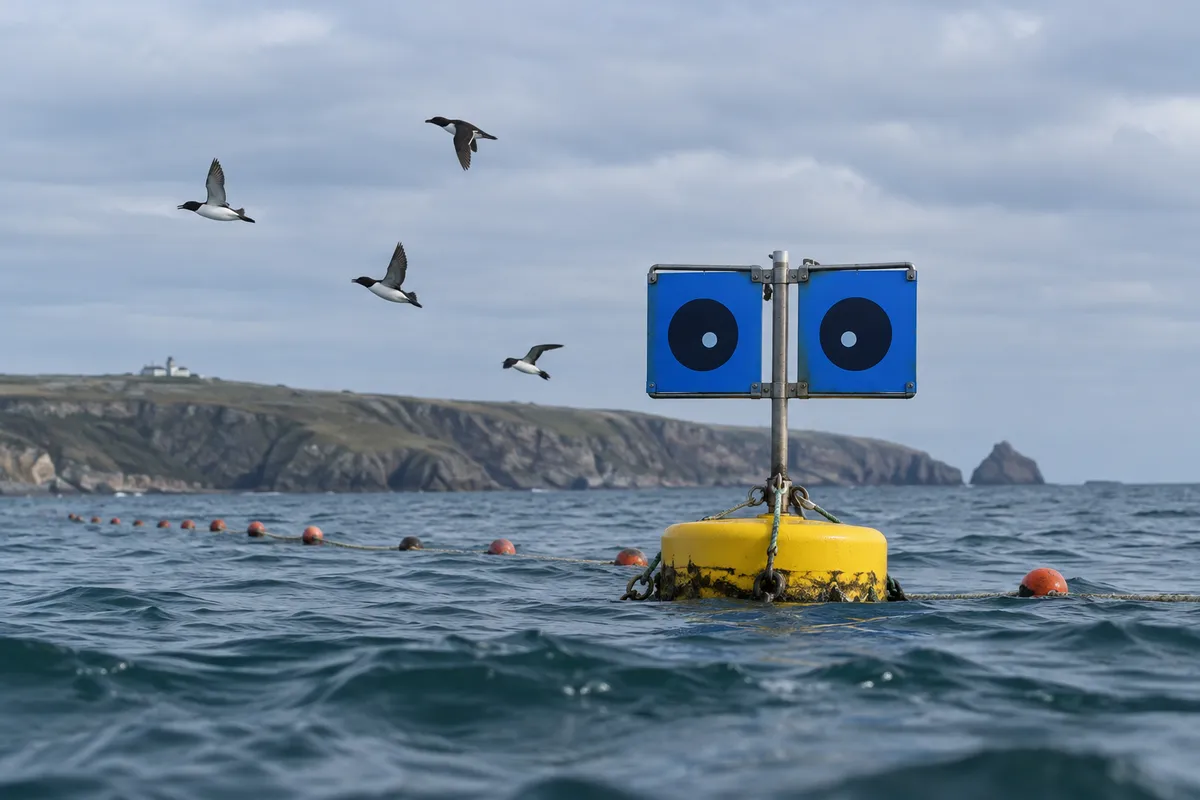
Scientists in the U.K. have built a floating scarecrow for the sea, and it appears to work. According to Phys, a device called the Looming Eye Buoy (LEB) reduced seabird bycatch in fishing nets by around two-thirds when it was deployed strategically. By the end of this article, you'll know how it works, why diving seabirds are so vulnerable, and what this tells us about protecting wildlife without shutting down fishing.
What the Looming Eye Buoy actually is
The LEB is a buoy that floats near fishing nets and creates an animated eye effect. Think of a scarecrow, but designed for birds that spend their lives on open water. The idea is that the "looming" eye reads as a threat, so birds steer clear of the area.
Per Phys, the researchers tested it off Cornwall alongside a second deterrent: a repurposed bird-scaring kite that mimics a bird of prey. The target was threatened diving seabirds such as guillemots and razorbills.
Why diving seabirds get caught
The problem is gillnets, which are fishing nets that hang in the water like a curtain. Diving seabirds chase fish underwater, and a net is easy to miss. A bird that swims into one can become tangled and drown.
The scale is large. Phys reports an estimated 95,000 diving seabirds drown every year in European gillnets. That makes accidental catch, known as bycatch, a serious conservation problem for species already under pressure.
What the results show
The headline number is a reduction in bycatch of around two-thirds when the buoy was used strategically. That word matters. The device wasn't simply dropped anywhere at any time. The findings were tied to specific seasons and locations, which means the data helps show when and where protection counts most.
That's a practical point. If birds are most at risk in certain places and months, deterrents can be concentrated there rather than spread thinly everywhere. It saves effort and money for fishers and conservation teams alike.
Why a simple deterrent is such good news
Many bycatch fixes ask fishers to change how they fish, or to stop. A low-cost deterrent aims for something easier: keep working, and keep birds out of the nets. Phys describes the research as some of the strongest evidence yet that simple, inexpensive deterrents can protect vulnerable seabirds without disrupting fishing operations.
That matters for food security and livelihoods, and it matters for adoption. A solution fishers will actually use beats a perfect one they won't.
How this compares with other results
Phys notes that success rates above 90 percent have been seen in African fisheries. Two-thirds is lower than that, so this isn't the end of the story. It's better read as a solid, evidence-backed step, with room for the design and deployment to improve. The different results also hint that what works can depend on the species, the place and the type of fishery.
The takeaway
If you care about wildlife and sustainable seafood, pay attention to the unglamorous fixes: cheap, targeted tools tested with fishing communities tend to travel further than bans. Next time you hear about a conservation problem, ask what it would take to make the solution easy enough to use.