
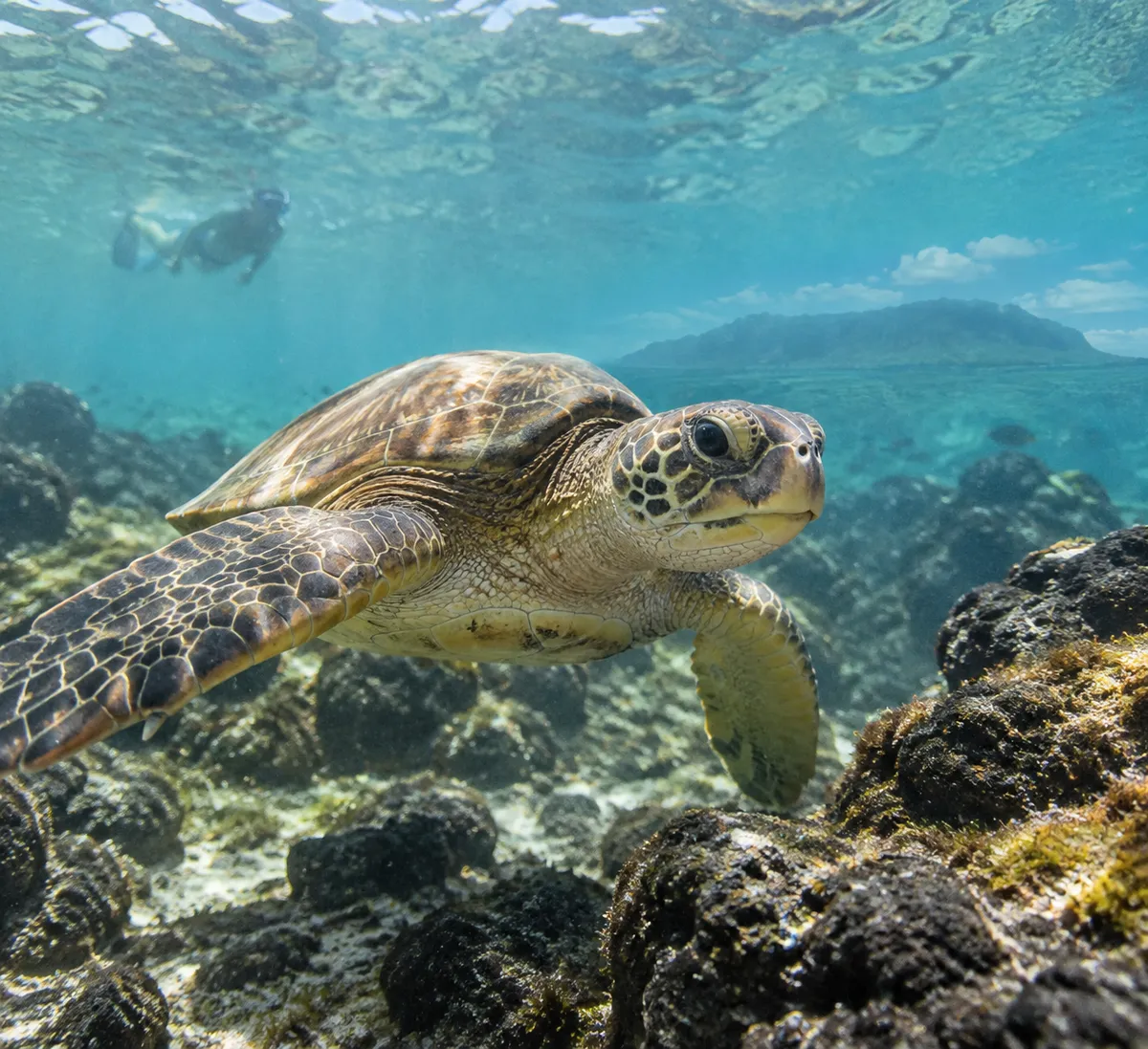
Sea turtles have a reputation as the ocean's great travelers. So when scientists tracked a group of Galápagos green turtles, they expected long journeys. Instead, per a report from Phys, the so-called yellow-morph turtles stayed within the Galápagos marine reserve. By the end of this article, you'll know why that's a surprise, how researchers can tell, and why a homebody turtle changes how we think about protecting ocean animals.
The surprise: a famous wanderer that stayed put
Sea turtles are known for crisscrossing the seas in search of food. Phys describes them as guided by Earth's magnetic field, ocean currents and the sun, and often returning to the region where they were born.
That's the picture most people carry around, and it's a reasonable one for many species. But the scientists studying yellow-morph green sea turtles in the Galápagos found something different. These turtles did not head off across open ocean. They remained inside the marine reserve.
What "yellow" turtles are
Green sea turtles in the Galápagos come in more than one look, or morph. The yellow morph is one of them, and it is often discussed alongside the darker, black-colored green turtles. The study's point is that different groups of the same species may not behave the same way. Color can be a clue that a population has its own habits, and that's a useful reminder that "the sea turtle" is not one single lifestyle.
How scientists know where a turtle goes
You can't follow a turtle through the ocean with binoculars. Researchers track animals with tags that record their movements, letting them see where an individual spends its time over weeks and months. That is how this finding emerged: the tracks stayed inside the reserve rather than stretching toward distant feeding grounds.
This is why tracking matters. Without it, we'd likely have kept assuming these turtles behaved like their far-roaming relatives, because that's what the species' reputation suggested.
What they were doing instead
The study suggests these turtles use shallow coastal habitats and routes between islands in a more local way than researchers assumed. In other words, the Galápagos itself seems to offer what they need: places to feed and paths to move between them. There is no obvious reason to leave if home has the essentials.
That's our reading of the finding rather than a claim from the researchers, but it's a simple way to think about it. Long migrations are costly. If food and shelter are close, staying close makes sense.
Why a homebody turtle matters for conservation
Here's the practical consequence. Protection plans for migratory animals often focus on the whole route, such as international waters, distant nesting beaches and far-off feeding areas. For these yellow turtles, the local picture appears to matter a great deal.
Phys notes that marine reserves face pressure from fishing, tourism, climate shifts and coastal degradation. If a population depends heavily on shallow coastal habitat and inter-island routes inside a reserve, then damage to those specific places could hit it harder than damage elsewhere. A species can be "migratory" on paper while one of its groups lives almost entirely in a small area.
It also complicates simple conservation rules. Populations with distinct morphs and movement patterns may need different approaches, rather than one plan applied to every green turtle.
What to take from it
A few easy ways to remember this finding:
- Reputation isn't behavior. A species can be famous for one thing while a subgroup does something else.
- Tracking corrects assumptions. Data from tags can overturn what seemed obvious.
- Local habitat counts. Even animals known for traveling may rely on a specific stretch of coast.
The takeaway
Next time you hear that an animal "migrates," ask which animals, and from where. The Galápagos yellow turtles are a neat reminder that protecting the ocean sometimes means protecting a small, specific place that someone is quietly calling home.