A single face photo might tell a doctor something your birth certificate can't: how old your body actually seems to be. By the end of this article, you'll know what researchers built, why doctors might want it, and the questions that should come with it.
What researchers built
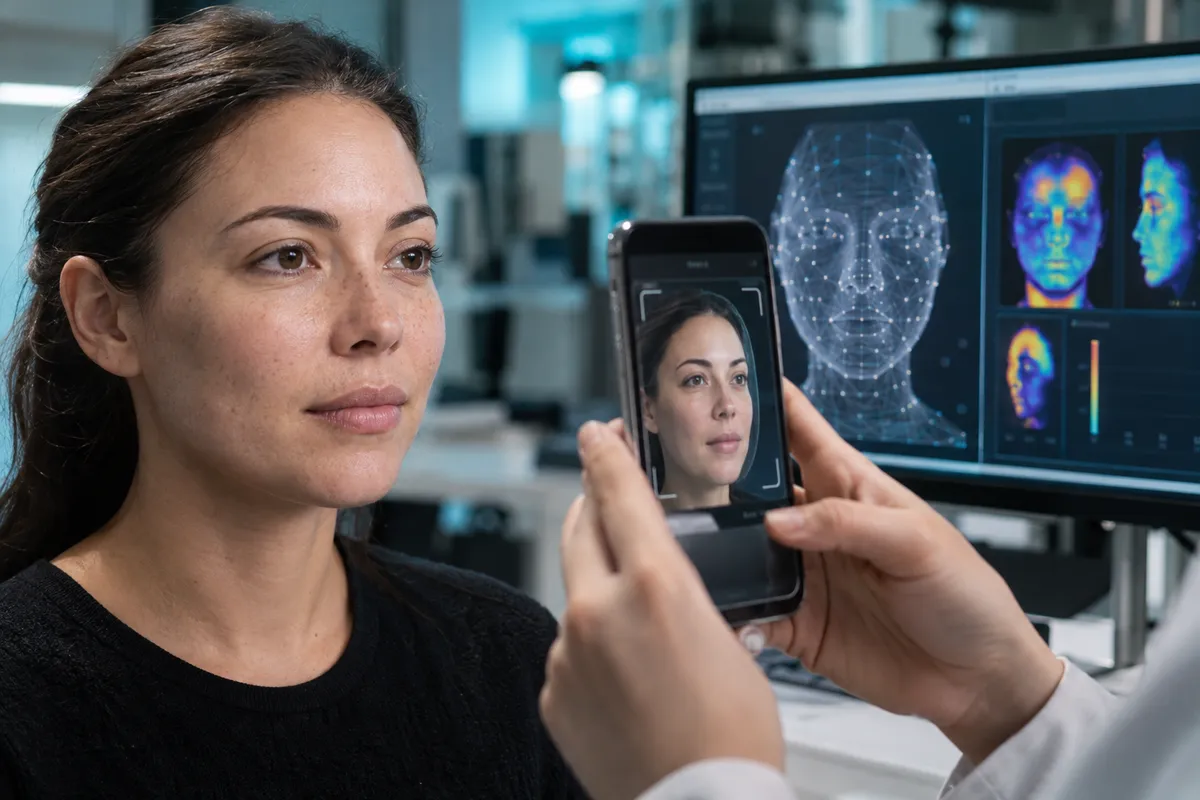
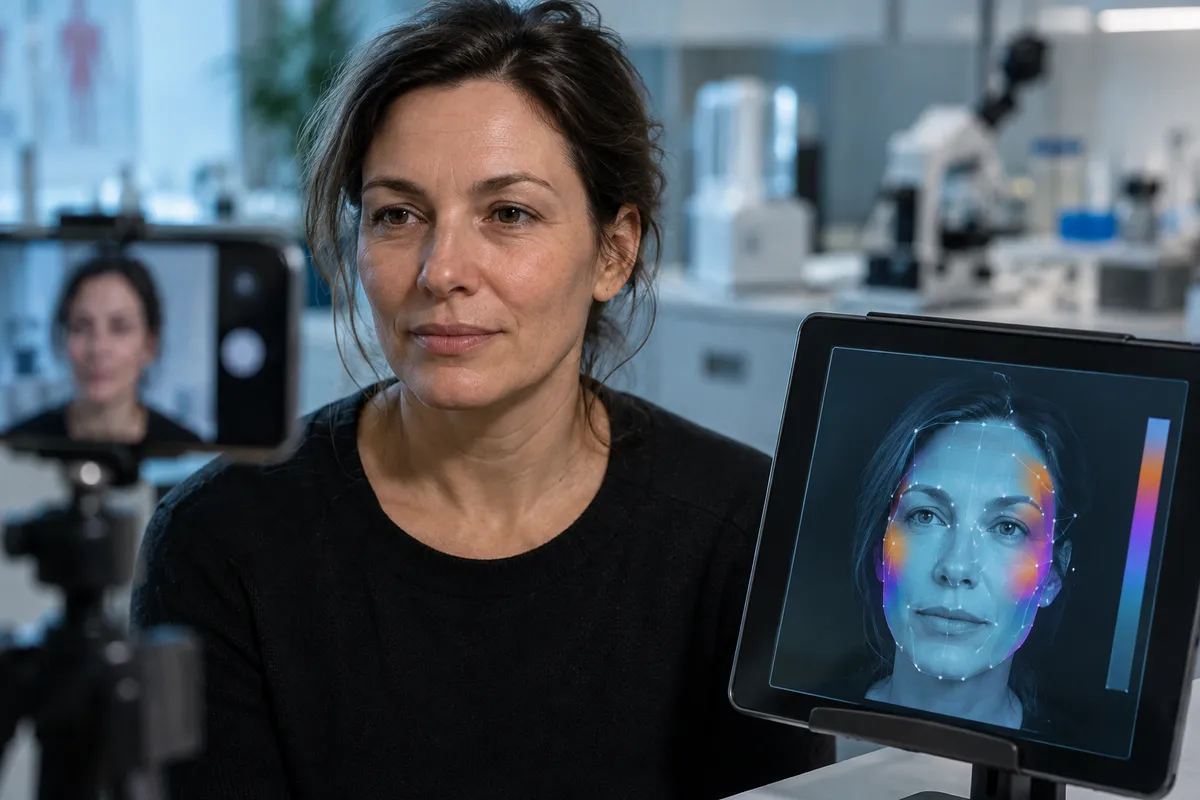
Researchers at Mass General Brigham developed FAHR-Face, an AI foundation model trained on more than 40 million face images, according to Medicalxpress. Its job is to estimate biological age and predict cancer survival risk from one facial photograph.
A foundation model is a large AI system trained on a huge, broad set of data first, then adapted to specific tasks. Think of it as learning what faces look like in general before being asked to say something medical about one of them.
Biological age vs. the number on your ID
Your chronological age counts years since birth. Biological age is a rough estimate of how worn the body is. Two 70-year-olds can differ a lot: one hikes mountains, the other struggles with stairs.
Faces carry clues to that difference. Skin texture, tissue changes and overall appearance shift as we age, and not at the same pace for everyone. The idea behind FAHR-Face is that an AI trained on enough faces can pick up patterns that a person glancing at a photo would miss or judge inconsistently.
Why a doctor might care
The study argues that facial AI could help physicians assess frailty, meaning how much physical reserve a patient has. That matters for cancer care. Intensive treatments can help, but they also demand a lot from the body. A clinician deciding what to recommend wants a good read on whether a patient can handle them.
Right now, that judgment often rests on a doctor's impression and the patient's history. A photo-based tool would be a fast, cheap, scalable addition, since taking a picture needs no special equipment or lab visit. As populations age and treatment becomes more personalized, that kind of scalability is the appeal.
The researchers frame this as support for clinical judgment, not a replacement for it. The AI would add one more data point to a conversation between doctor and patient.
Predicting cancer survival from a selfie-style photo
The model also estimates survival risk for people with cancer. This is the most striking claim, and the most sensitive. A face photo becomes a clinical signal, a kind of biomarker, similar in spirit to a blood test result.
A risk estimate is not a verdict. It describes a statistical tendency across many people, not what will happen to one person. Used well, it might flag a patient who deserves a closer look before a demanding treatment plan. Used badly, it could be mistaken for certainty.
The questions that come with it
The coverage points to promise alongside real concerns. These are the ones worth asking, framed as questions rather than findings:
Who sees the photo, and where does it go?
A face is identifiable in a way a blood sample is not. Any health tool built on faces raises questions about storage, consent and who else could access the images or the predictions made from them.
Does it work equally well for everyone?
AI trained on faces can reflect the data it learned from. Skin tones, ages, lighting and camera quality all vary. Whether a model performs fairly across different groups is a standard test for tools like this, and one patients and doctors should expect to see answered.
Should a prediction steer treatment?
This is the central ethical question. If a model suggests a patient is frail, will that nudge doctors toward gentler care when the patient might have tolerated more? The researchers' emphasis on keeping clinical judgment in charge speaks to this, but how it plays out in practice is still to be seen.
What this shows about where medical AI is heading
AI has long been good at recognizing what is in an image. FAHR-Face is an example of it moving into something different: using an ordinary image to estimate hidden health information. Medical foundation models like this one are part of that shift.
The surprising takeaway is how much a photo you could take in seconds may hold. The practical one is that a tool being possible doesn't settle how it should be used.
If tools like this reach your doctor's office, ask three things: what the prediction is for, how it will affect your care, and what happens to your image afterward.