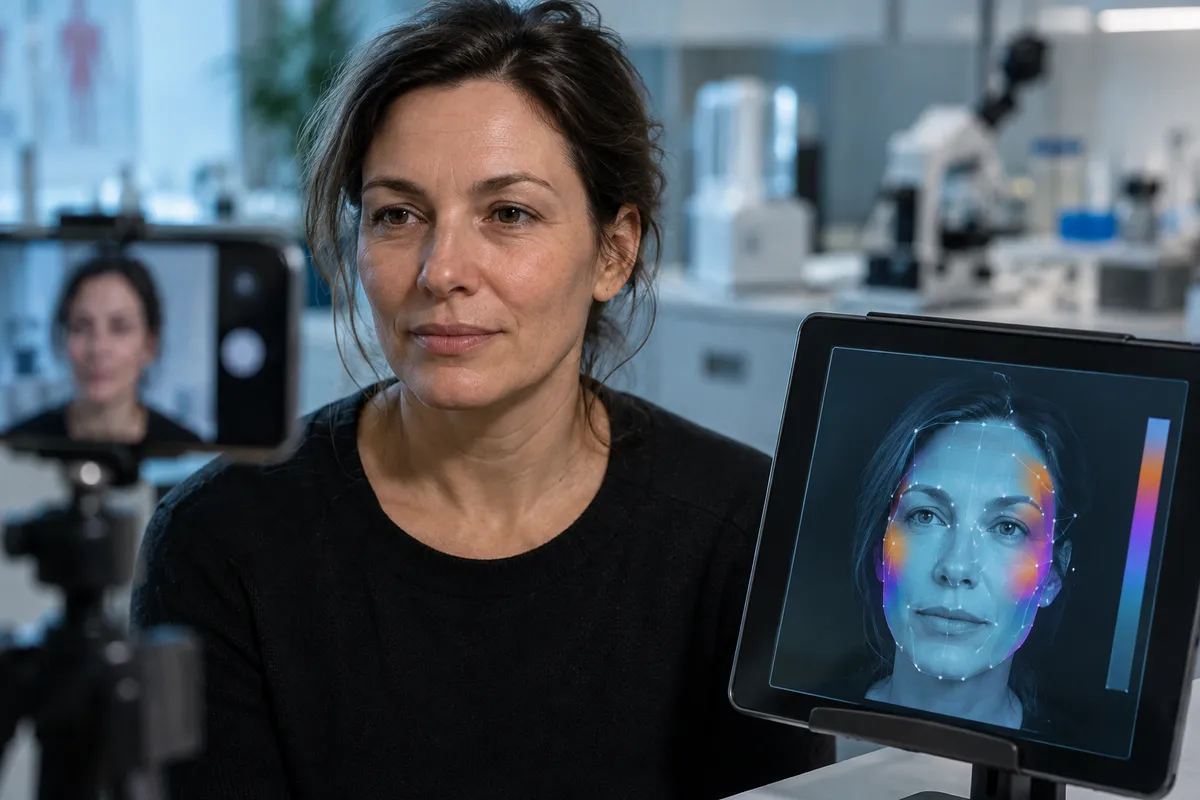
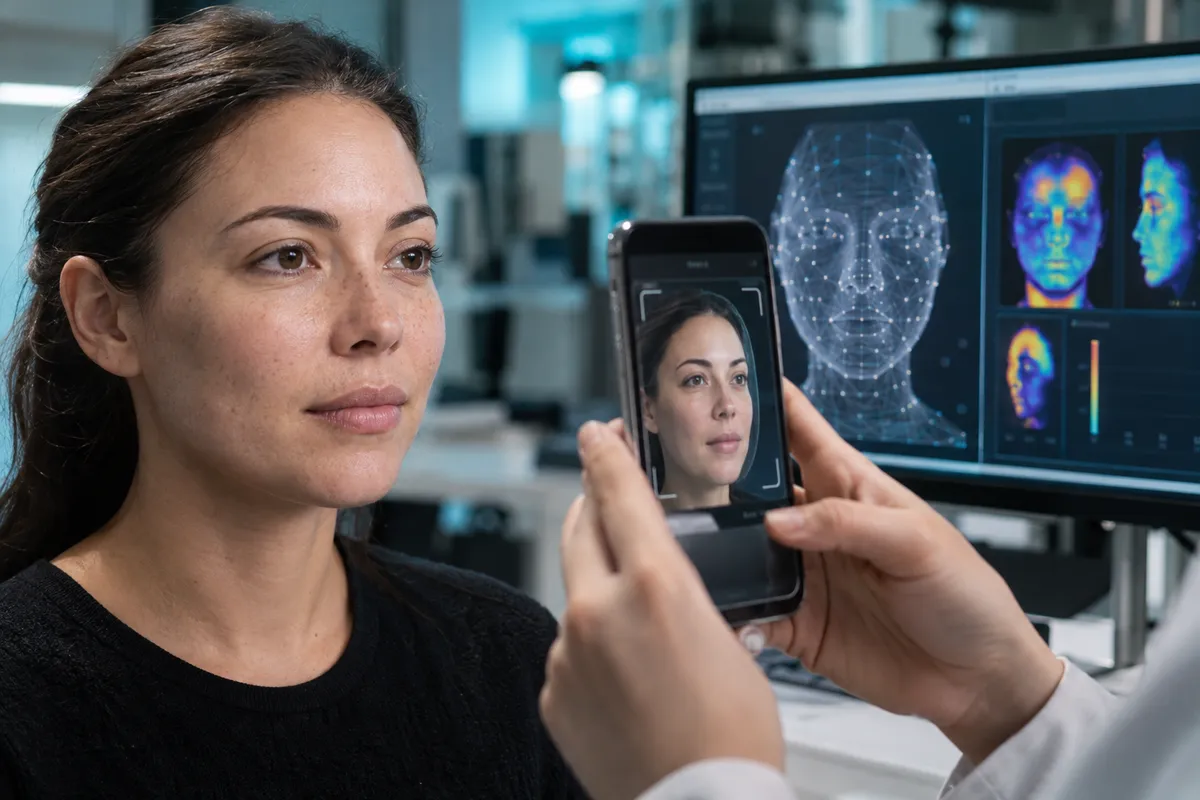
A single photo of your face may soon tell a doctor something your birth certificate can't: how old your body actually is. Researchers at Mass General Brigham have built an AI tool called FAHR-Face that estimates biological age and predicts cancer survival risk from one face photograph, according to reporting by Medicalxpress. Below, you'll see how a photo becomes a health signal, why doctors might want one, and where the real concerns sit.
What FAHR-Face is
FAHR-Face is a foundation model, a type of AI trained on a very large pool of data first and then adapted to specific tasks. Per Medicalxpress, this one was trained on more than 40 million face images. From a single photo, it estimates biological age and predicts survival risk in people with cancer.
The study's argument is modest in one important way: facial AI could help physicians assess frailty and personalize treatment, without replacing clinical judgment. It is framed as an extra piece of information for a doctor, not a verdict.
Chronological age vs. biological age
Your chronological age is the number of birthdays you've had. Biological age is an estimate of how worn or resilient your body is. Two 65-year-olds can differ a lot: one hikes mountains, the other struggles with stairs.
Faces carry clues about that difference. Skin, tissue structure and overall appearance change as the body ages, and they change at different speeds in different people. Humans already use this informally. A doctor glancing at a patient often forms a quick impression of how frail or robust they look. An AI trained on tens of millions of faces can, in principle, turn that hunch into something more consistent.
I can't tell you from the reported material exactly which facial features the model weighs most. That detail would be in the study itself, so treat any claim about specific wrinkles or features with caution.
Why a doctor would want this
Cancer treatment is a balancing act. Intensive therapies can help, but they demand physical reserve, meaning the body's ability to tolerate side effects and recover. A patient who is more frail than their age suggests may need a gentler plan. A patient who is sturdier than their age suggests might handle something more aggressive.
The case for facial AI, as Medicalxpress describes it, is scale. As populations age and treatments become more personalized, clinicians need ways to judge physical reserve that are quick and cheap. A photograph takes seconds and needs no special equipment, unlike many tests of frailty.
What it can't tell you
A survival-risk estimate is a statistical prediction about groups of people, not a prophecy about you. Three limits are worth keeping in mind:
- It is one input. The researchers' own framing is that it supports, not replaces, clinical judgment. A doctor still weighs scans, lab results, symptoms and your preferences.
- A risk score isn't a diagnosis. Estimating that someone is biologically older doesn't say why, and it doesn't say what to do about it.
- Predictions can be wrong for individuals. Any model that averages across millions of faces will misjudge some people.
The questions it raises
The most interesting part of this story isn't the technology. It's the set of questions that comes with it. These are my analysis, not findings from the study.
Privacy
A face photo is easy to collect, and you can't change your face. If a picture can reveal health risk, who gets to run that analysis? Doctors with your consent is one thing. Insurers, employers or apps analyzing photos without you knowing is another. Clear rules on consent and data use would matter before tools like this spread.
Bias
An AI is only as representative as its training data. Faces differ across ethnicity, skin tone, age and lighting conditions, and a model that works well on one group may work worse on another. Anyone evaluating a tool like this should ask how it performs across different kinds of people, not just on average.
Treatment decisions
The sharpest worry is a self-fulfilling one. If a score labels a patient as high risk, could that quietly steer them away from treatment that might have helped? That is why the emphasis on keeping a clinician in charge matters. A score should prompt a conversation, not close one.
Why this is a bigger shift than it looks
Face recognition AI has mostly been about identifying who you are. FAHR-Face points to something different: using a face as a biomarker, a measurable sign of what's happening inside the body. It is also a timely example of medical foundation models, large general-purpose systems, moving from recognizing images to predicting health outcomes.
That shift is why it's worth understanding now, even though a tool like this is a research result, not something you'll encounter at your next appointment.
What to do with this
Next time you read about an AI that "reads health from a face," ask three questions: who was it trained on, what decision will it influence, and who controls the photo? If a story can't answer those, the technology isn't the interesting part yet.