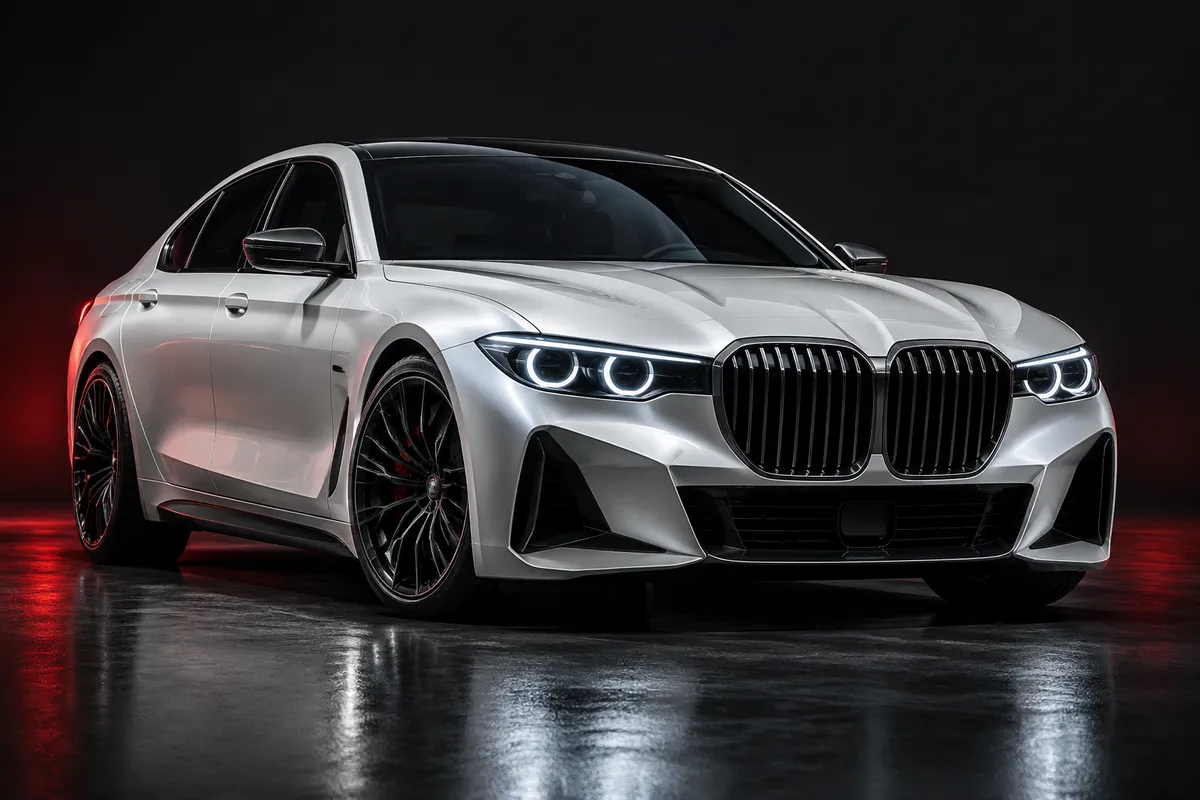
A designer in Georgia has imagined a 2029 BMW 5 Series that turns its back on the brand's Neue Klasse styling. By the end of this piece, you'll know what the render shows, what's real and what's imagination, and why a few lines on a car's face can set off such big arguments.
What the render actually is
Per Autoevolution, the image comes from Giorgi Tedoradze, an industrial designer based in Georgia who goes by "tedoradze.giorgi" on social media. This is an unofficial CGI rendering. BMW has not announced or shown a 2029 5 Series, and nothing here is a leak. It is one designer's idea of what the car could look like.
That distinction matters. A render is a sketch with very good lighting. It shows what a designer wishes were possible, not what an engineering team, a budget, and a safety regulator would allow.
What he changed
According to Autoevolution's description, the concept rejects the Neue Klasse direction and instead offers:
- Modernized angel eyes, the ring-style headlight signature BMW fans associate with earlier generations
- Sculpted kidney grilles
- A sportier look meant to work for both combustion and electrified versions
The last point is the interesting one. Many current electric cars drop the grille entirely or fake it. This render keeps a prominent kidney shape, which suggests the designer sees it as the heart of BMW's identity, not a relic.
Why design identity is such a big deal
A car's front end works like a face. Over years, you learn to recognize a brand from a distance, before you can read a badge. BMW's kidney grille and its headlight shapes have done that job for a long time.
When a company changes that face, some people see a fresh start and others see a loss of character. That's why renders like this travel well online: they let people vote with their reactions on which future they'd prefer.
The real-world backdrop
Per the Autoevolution report, BMW is preparing major lineup updates, including a 5 Series facelift (known in the industry as an LCI) that is expected to adopt Neue Klasse styling. The same report notes the brand is also undergoing major workforce cuts.
Those are separate facts, and the report doesn't claim they're connected. But together they frame the moment: a company in transition, and fans debating what it should look like afterward.
A simple way to judge a render like this
You can evaluate any fan concept in three quick steps.
1. Check who made it
Here, it's an independent industrial designer, not BMW. That means no inside information, only taste.
2. Look for what's hard to build
Renders can use razor-thin lights, perfect proportions, and no practical constraints like pedestrian-safety rules, cooling needs, or sensor placement. Ask what a production car would have to compromise.
3. Ask what it's really arguing
This one argues that BMW's older visual cues still have a place in a future where powertrains vary. You can agree or not, but naming the argument makes it easier to judge than simply reacting to how it looks.
So, should BMW change course?
That's the fun part, and nobody can settle it with facts yet. Nostalgia is a powerful pull, and familiar cues can reassure buyers. But brands that only look backward risk looking dated, while brands that change boldly risk alienating their loyal audience. Neither path is automatically right.
What the render does show is that there is an appetite for alternatives. Even if BMW never builds anything like it, designs like this tell you what fans feel is missing or worth keeping.
The takeaway
Next time you see a polished concept image of a future car, treat it as a question, not a preview. Ask what the designer is trying to say, then decide whether you agree. That habit makes you a sharper judge of design, whether the car is real or just pixels.