
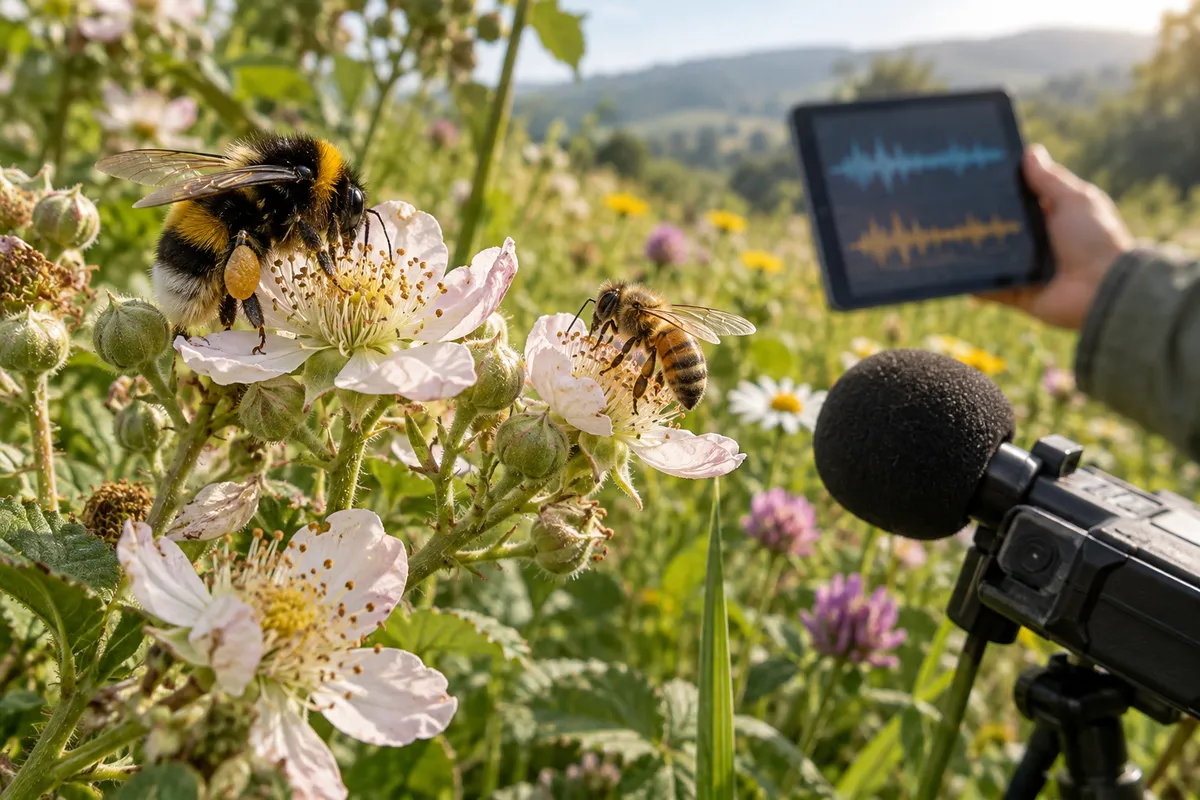
Researchers have trained AI models to pick out bee activity from field audio recordings, and to tell honeybees from bumblebees, using nothing but sound. By the end of this article, you'll know how that works, why it matters, and what it could change about how scientists keep track of the insects we depend on. The work was reported by Phys.
The problem: counting bees often means killing them
Populations of many pollinators, including bumblebees, have been crashing over the last few decades, per Phys. The reported causes are the widespread use of chemical pesticides, loss of habitat, and the acceleration of climate change.
To protect bees, scientists need to know where they are and how many there are. But traditional monitoring often relies on lethal traps. That creates an awkward tradeoff: the surveys meant to help conserve pollinators can harm the very insects being studied.
The idea: treat a buzz like a fingerprint
You probably already know that not every buzz sounds the same. A honeybee and a bumblebee make different sounds as they fly past. The researchers' approach was to teach AI models to recognize those differences in recordings made in the field.
In plain terms, it works like this:
- Microphones capture audio in the places bees forage.
- AI models are trained to spot when a recording contains bee activity.
- The models then sort the buzzes, distinguishing honeybees from bumblebees.
No insect has to be caught, pinned, or counted by hand. The recording does the work, and the AI does the listening.
The result: high precision
Per Phys, the main finding is that acoustic AI monitoring achieved high precision. That means that when the system flagged something as bee activity, or as a particular kind of bee, it was usually right.
The researchers' framing is also worth noting: the tool is meant to complement traditional pollinator surveys, not replace them outright. Think of it as adding a new instrument to the toolkit. Some questions may still call for a close look at the insects themselves, but many routine "are bees here, and which ones?" questions could be answered by sound.
Why sound can reach where people can't
According to the report, non-lethal AI tools offer a scalable way to track bee activity in hard-to-sample places and conditions. That follows from how audio works. A microphone can sit in a spot that's remote or awkward to visit, and it can keep recording without someone standing over it. Our analysis: that's the real appeal of the approach. More coverage in more places can give conservationists a fuller picture than occasional trap-based snapshots.
A bigger shift: animal sounds as data
This study is one example of a broader idea. Animal sounds are becoming data for conservation. Instead of treating a recording as something a human has to sit and listen to, researchers can let AI sift through it and pull out the signal.
For bees, that's a hopeful twist on a gloomy story. The same technology often discussed in worrying terms is here being used to help scientists protect wildlife without disturbing it.
What you can take from this
Bees are declining, and good monitoring is essential to doing anything about it. This research suggests we may not have to harm pollinators to count them. The next time you hear a buzz in a garden or meadow, remember that it carries information, and scientists are now teaching machines to read it. Pay attention to the pollinators around you; they're worth listening to.