
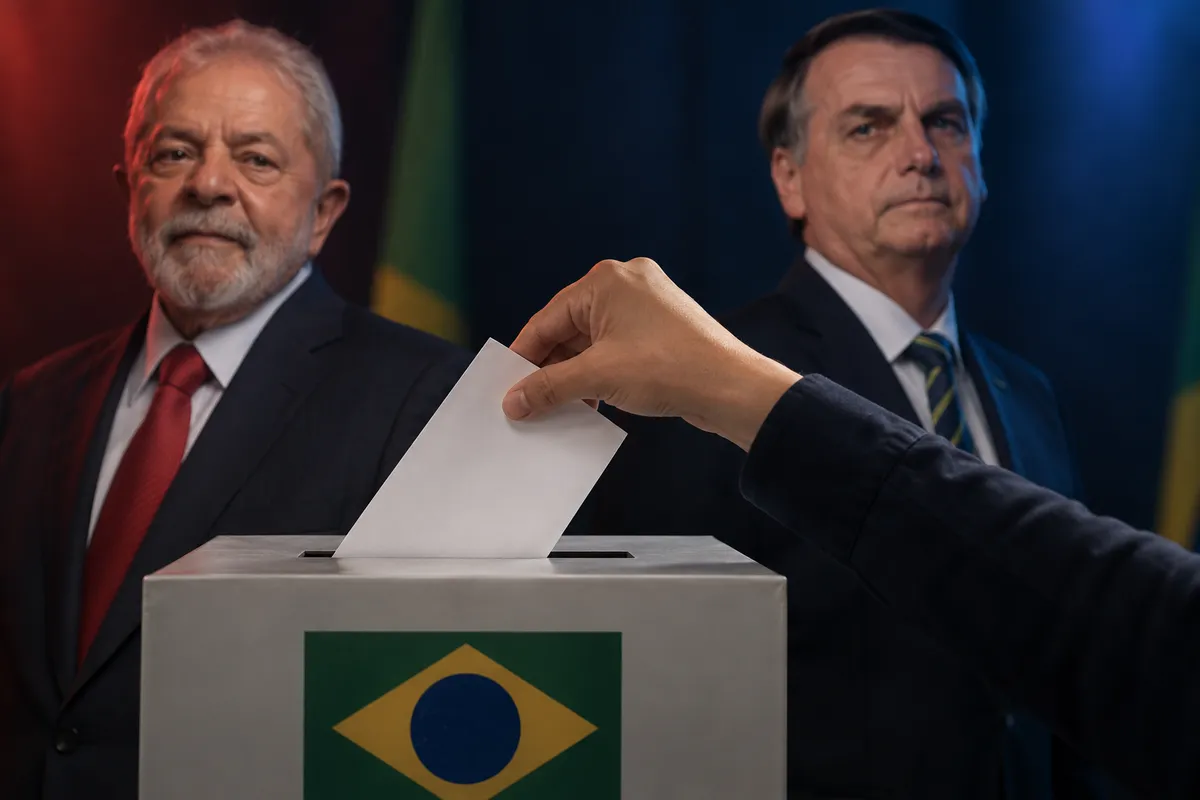
Brazilians return to the polls on Sunday to choose between two candidates campaigning on sharply different versions of the country, according to CNN. By the end of this article, you'll understand why fear of crime and corruption can matter as much as party loyalty, and what that tells you about this election.
What is actually on the ballot
CNN frames the vote as a test of Luiz Inácio Lula da Silva's leftist legacy against the enduring right-wing movement built around Jair Bolsonaro. Voters are weighing competing visions of what Brazil should be.
CNN also points to the backdrop: growing concerns over crime, corruption, and a broader rightward shift among Latin American voters. Those three forces shape how the choice feels to the person standing in the voting booth.
Why crime and corruption carry so much weight
Political scientists often describe voters as choosing on ideology: left or right, bigger government or smaller. Real decisions are messier. Crime and corruption are different from most policy debates because they are felt personally.
Security is a daily calculation. It shapes which route you walk home, whether you open a shop late, and how safe your kids feel. Corruption works similarly in a less visible way. It's the sense that money meant for schools, clinics, and roads is going somewhere else.
This is my analysis, not CNN's reporting: when a worry is that immediate, a voter may rank it above a party's broader philosophy. That helps explain why two people with similar incomes and similar neighborhoods can vote differently. They may disagree about which candidate is more credible on keeping them safe and on cleaning up government.
Loyalty versus frustration
The interesting tension is between two kinds of voter motivation.
Identity-based loyalty
Lula's leftist legacy and Bolsonaro's movement are both described by CNN as enduring. Each has a committed base that sees the election as a battle over the country's future. For these voters, the candidate stands for a whole way of seeing Brazil.
Problem-based frustration
Other voters are asking a narrower question: who will fix the thing that worries me most? CNN's reporting notes that concerns over crime and corruption are growing. Those concerns can move people who don't feel tied to either camp.
The result is an election where polarization and practical anxiety overlap. A candidate can hold a loyal base and still have to convince everyone else that they can deliver on security and governance.
Why the rest of Latin America is watching
CNN describes a broader rightward shift among Latin American voters. That makes Brazil, the region's largest country, a natural bellwether. Its outcome could signal whether Lula's progressive coalition can withstand public frustration over security and governance.
A single election never proves a regional trend. Still, a result in Brazil will likely be read across the region as evidence for or against the idea that voters are moving right. Treat those readings as interpretation, not settled fact.
How to read the results when they come in
You don't need to be a political expert to follow the story. A few questions make the coverage easier to understand:
- Which issue do voters say mattered most? If crime and corruption lead the exit polling, that supports the frustration story.
- How close is the margin? A narrow result suggests a country still split between two durable movements.
- How do neighbors react? Regional commentary will show whether Brazil is being treated as a signal of a wider shift.
The takeaway
When you read about any election, look past the left-versus-right label and ask what voters are afraid of and who they trust to address it. In Brazil, that question may explain more than ideology alone.