
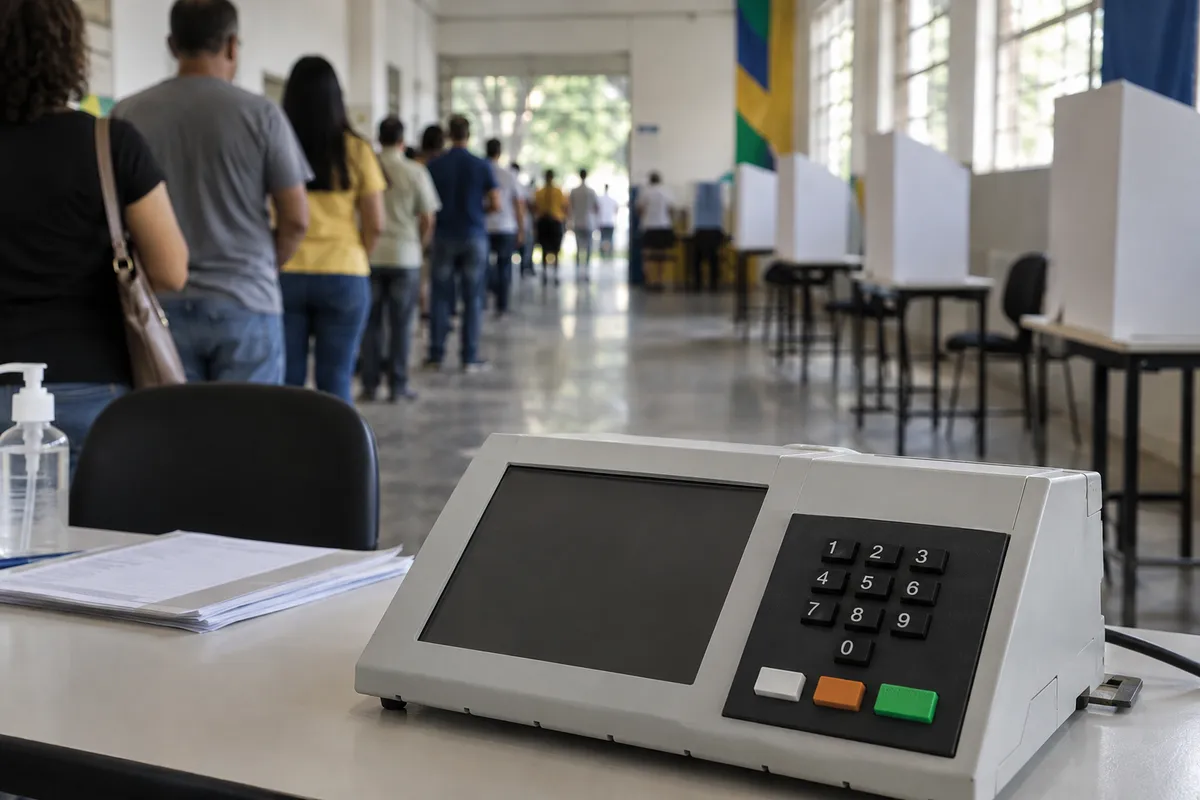
Brazil's presidential runoff is close enough that the winner may be decided by people who aren't in the polls' favorite column at all: the ones who stay home. By the end of this piece, you'll know why turnout is the number to watch and how to read the final-day rallies without getting swept up in them.
What's happening
Per HuffPost, the last arguments to voters are being made on the eve of the runoff between incumbent President Luiz Inácio Lula da Silva and Sen. Flávio Bolsonaro. HuffPost describes an extremely tight finish, with both camps staging major rallies aimed at undecided voters and at people who didn't vote last time.
Nearly 160 million Brazilians are eligible to vote, according to the report. That is a huge electorate, which is exactly why a small shift in who shows up can matter.
The number that matters: 33 million
HuffPost reports that 33 million eligible voters skipped the first round. Think of them as a third camp that neither candidate can count on.
Here is why that group matters so much in a close race:
- They're a reservoir, not a bloc. We don't know from the reporting how they would split. Some may be undecided, some disengaged, some simply unable to get to a polling place.
- Small slices add up. In an electorate of nearly 160 million, even a modest change in the share of those 33 million who turn out could outweigh the gap between two evenly matched candidates.
- Persuasion and logistics both count. A campaign can win an argument and still lose if its supporters don't make it to the ballot box.
That's the quiet logic behind a runoff: the field narrows to two names, so the contest becomes less about introducing yourself and more about mobilizing people.
Why the rallies aren't just theater
Both candidates held large closing events, per HuffPost. It's easy to dismiss rallies as pageantry, but in a tight race they serve a practical purpose.
They do three things at once. They energize existing supporters, which helps turnout. They generate images and coverage that signal momentum to wavering voters. And they give campaigns a last chance to hammer a single message. My read, not a finding from the report, is that crowd size says little about the final result, since a rally only reaches people already willing to attend. The real test is who votes the next day.
What each side is arguing
HuffPost frames the vote as a high-stakes choice over Brazil's political direction, including its relationship with Washington. The runoff pits the sitting president against a senator who carries the Bolsonaro name, so the contest also carries symbolic weight about which political tradition leads Latin America's biggest democracy.
The regional backdrop
The election doesn't happen in isolation. HuffPost notes that several Latin American countries have recently elected leaders aligned with Donald Trump. That context explains why observers outside Brazil are watching closely: the result will either extend that pattern or interrupt it.
A caution is in order. A regional trend is a backdrop, not a prediction. Brazilian voters are choosing between two specific candidates, and each country's results have had their own local drivers.
How to follow results like a pro
If you want to cut through the noise on election night, keep these in mind:
- Watch turnout first. Headlines about the margin come later. Whether participation rises from the first round tells you whether the nonvoter pool was mobilized.
- Treat early counts cautiously. Partial returns reflect which areas report first, not necessarily the final picture in a close race.
- Separate the symbolism from the arithmetic. Lula versus Bolsonaro is a powerful story, but the outcome is a vote count.
- Don't over-read the region. The wider rightward shift is useful context, not a rule.
The takeaway
When a race is this tight, stop asking which candidate has the louder rally and start asking who gets their people to the polls. In Brazil, 33 million first-round absentees are the group to watch.