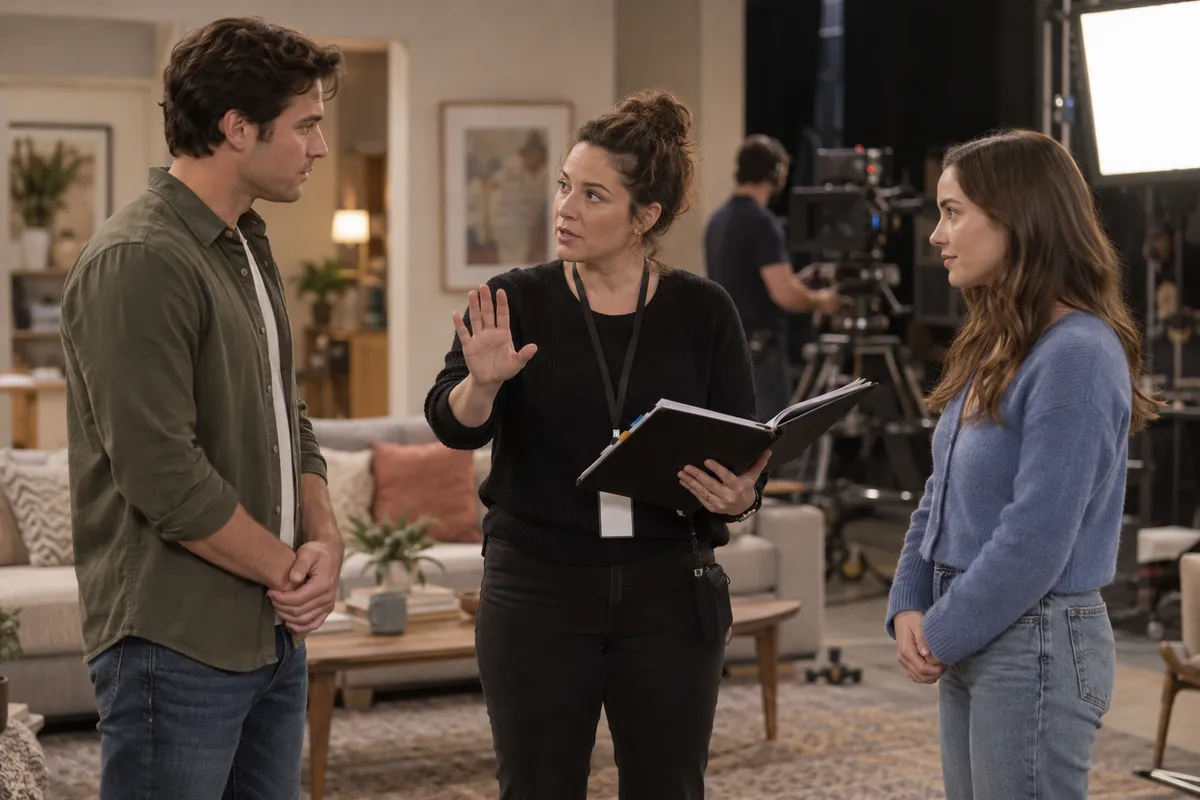
Emily Osment has said she asked for an intimacy coordinator on "Young Sheldon" because kissing scenes with co-star Montana Jordan felt uncomfortable, per a report from TheWrap. She pointed to two things: the age gap between them and the fact that they didn't know each other well. Osment and Jordan now headline the spin-off "Georgie & Mandy's First Marriage."
That detail is useful because it answers a question many viewers have: do intimacy coordinators only show up for steamy, explicit scenes? Osment's story suggests no. By the end of this article, you'll know what these professionals do, why a mild sitcom kiss can still call for one, and what that tells you about how TV romance gets made.
What the story says
According to TheWrap's report, Osment requested an intimacy coordinator because the romantic scenes with Jordan, who played her on-screen love interest, felt uncomfortable. The two reasons she gave were the age gap and not being familiar with each other.
The report frames this as part of a larger conversation in Hollywood. Intimacy coordination has become a major workplace-safety topic, and more actors are speaking openly about boundaries on set.
The coverage also casts Osment as advocating for a younger co-star, though the details of that are limited to what she shared. We'll stick to what's been reported.
What an intimacy coordinator actually does
The job isn't to police romance or to make scenes less believable. Think of it as the same kind of planning that goes into a stunt, applied to physical closeness. A coordinator helps actors and the production agree on structure so nobody is improvising with another person's body.
In general terms, that support can include:
- Talking through the scene beforehand. Everyone knows what will happen, rather than finding out on the day.
- Setting clear boundaries. Actors can say what they are and aren't comfortable with, and have someone to say it to besides the director.
- Choreographing the moment. A kiss can be planned like a fight or a dance, with defined steps.
- Giving actors a go-between. Raising a concern with a coordinator can feel easier than raising it with a boss.
These descriptions are a general overview of the role rather than details from Osment's interview.
Why a sitcom kiss can still need support
It's easy to assume only intense scenes carry risk. Osment's account points the other way. A brief, family-friendly kiss still involves two real people, physical contact, and a camera that may require several takes.
Two factors she cited are worth unpacking.
Familiarity
Casual-looking intimacy usually feels easier between people who trust each other. When co-stars haven't built that rapport, even a simple scene can feel awkward. A coordinator can supply some of the structure that familiarity would otherwise provide.
Age gap
Age differences can shape how comfortable a scene feels, and they can also affect who feels able to speak up. In my read, that's the quiet issue here: when one performer is younger or less established, having a formal process means they don't have to bring up discomfort alone. That's analysis, not something stated in the report.
How this changes behind-the-scenes TV
The appeal of a coordinator is that it turns a vague, possibly awkward social negotiation into a normal part of production. Nobody has to be the person who "made it weird." The request becomes routine.
That matters for audiences too. Romance on a sitcom looks effortless, but it's built from planning, consent, and communication. The ease you see on screen is often the result of someone making sure the people involved felt okay doing it.
The takeaway
If you remember one thing, make it this: consent on set isn't reserved for dramatic scenes. When you watch a simple on-screen kiss, know that the comfortable version often exists because someone asked for support first, as Osment says she did. The same lesson works off-screen: if a situation feels uncomfortable, naming it early and asking for structure is a reasonable move, not an overreaction.