
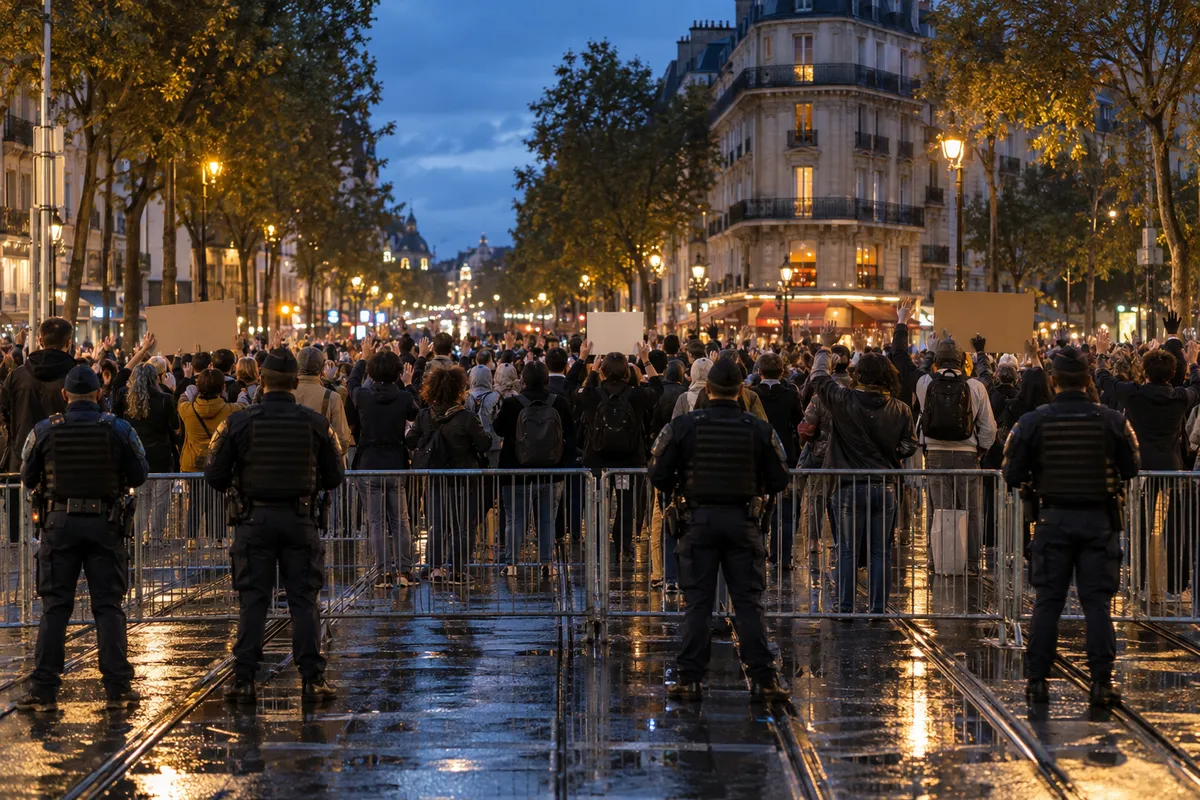
Hundreds of thousands of people protested across France on Saturday, according to the country's Interior Ministry, in demonstrations that were largely peaceful. Nearly 1,000 people were still detained over the weekend, CNN reported. That pairing raises a question worth answering: how can a mostly calm protest produce so many detentions? By the end of this article, you'll know how to read numbers like these and which questions to ask when you see them.
What we actually know
The facts from CNN's reporting are few, and it's worth keeping them separate from everything else:
- Hundreds of thousands of people took part in protests across France on Saturday, per the Interior Ministry.
- The demonstrations were described as largely peaceful.
- Nearly 1,000 people were detained.
- CNN framed it as another weekend of mass protests, which means this is not a one-off event.
The material available here does not say what triggered the protests, which cities saw the biggest crowds, what the detainees were accused of, or how many were later charged or released. Anything beyond the facts above would be guesswork, so this article doesn't offer it.
Why "largely peaceful" and "nearly 1,000 detained" can both be true
These two statements look like they contradict each other, but they can coexist. The reason is scale and arithmetic.
Suppose 300,000 people march. If 1,000 are detained, that is roughly 0.3 percent of participants, or about one person in 300. (Those figures are an illustration to show the math, not reported data. The Interior Ministry only said "hundreds of thousands.") A protest can be peaceful for 99.7 percent of its participants and still produce a four-digit detention count.
That is the first lesson in reading protest numbers: a big raw total can come from a small share of a very large crowd.
Three things a detention count can't tell you
Detained is not the same as charged
Detention generally means someone was taken into police custody. It does not tell you whether that person committed a crime, was charged, or was released soon afterward. Those outcomes usually surface days later, and they often matter more than the first headline number. Watching for follow-up figures is the single best way to judge what the initial count meant.
One number, many possible causes
People can be detained for very different reasons: alleged violence, property damage, refusing an order to disperse, or being swept up in a crowd. A single total hides all of that. Without a breakdown, the number can support almost any argument, which is why both critics and defenders of police tactics tend to quote it.
Who is counting
The crowd figure here comes from the Interior Ministry, a government source. Crowd estimates can differ depending on who counts, because organizers and authorities often use different methods. When you see a single official figure, treat it as one estimate rather than the final word. CNN attributed the number to the ministry, and that attribution is part of the information.
What the repeat pattern suggests
CNN described this as another weekend of mass protests. That phrasing points to sustained mobilization rather than a single flare-up. It's our reading, not a reported finding, but sustained turnout generally suggests the underlying grievance has not been resolved, and that organizers can keep drawing large crowds week after week.
It also means detention totals will likely be reported again. If you follow the story, compare weekend to weekend rather than judging any single number in isolation. A rising or falling ratio of detentions to participants says more than the headline total.
A quick checklist for reading any protest story
You can apply these questions to protests in any country:
- Who supplied the crowd estimate? Government, organizers, or independent counters?
- What does "detained" cover? Brief custody, arrest, or formal charges?
- What is the denominator? Compare detentions to total turnout.
- What happened afterward? Look for numbers on releases and charges.
- Is this a pattern? One weekend is a data point; several make a trend.
These five questions take about a minute and will make you harder to mislead, whichever side of an issue a headline favors.
What to do next
When the next number lands, whether it's 1,000 detentions or 10,000 marchers, ask what it's being compared to and who is doing the counting. For France specifically, look for updates from the Interior Ministry and outlets like CNN on how many detainees were released or charged. That follow-up will tell you far more than this weekend's total.