After the alleged attack on independent MP Helen Haines, Australian Federal Police Commissioner Krissy Barrett has drawn a direct line between the way politics is talked about and the threats elected officials face. By the end of this piece, you'll understand what she is describing, why words and images can matter beyond the screen, and what is at stake for ordinary people who want to reach their local MP.
This article sticks to what has been reported by The Guardian. Details of the alleged attack are still a matter for police and the courts, and nothing here goes beyond that reporting.
What the AFP commissioner is saying
Per The Guardian, Barrett says heated political rhetoric, inflammatory imagery and online abuse are linked to rising threats against Australian MPs. In her view, the threat environment for elected officials has worsened.
The reporting also highlights a pattern: women are more often singled out, and the threats directed at them often involve sexual violence.
That last point matters. Abuse is not spread evenly. It can take different forms depending on who is targeted, and the form it takes can be especially frightening.
Why words and images matter
Most people who see an angry post or a harsh cartoon never act on it. The concern raised in this reporting is about the overall climate, not any single message.
Here is a simple way to picture it. Think of political language as a dial rather than a switch. Strong disagreement sits at one end. Language that treats opponents as enemies, or less than human, sits further along. The further along it goes, the easier it can become for a small number of people to see a real person as a target.
That is our explanation of the idea, not a finding from the reporting. What Barrett's comments suggest is that officials responsible for safety see the tone of public debate as part of the risk picture.
Online outrage travels fast
Inflammatory imagery and online abuse are named in the reporting as part of the problem. Online, a sharp image or phrase can spread widely in hours, reaching people the original poster never imagined. Once it is out, nobody controls how it is read or who reads it.
Where debate ends and incitement begins
This is the hard question, and the reporting does not offer a tidy answer. Political debate is supposed to be robust. Satire and cartoons have long been part of it. Nobody is suggesting MPs should be immune from criticism.
A few practical tests can help you judge a piece of political content yourself. These are our suggestions, not official criteria:
- Is it aimed at ideas or at a person's safety? Attacking a policy is different from implying someone deserves harm.
- Does it picture violence? Imagery that glorifies or jokes about hurting someone is a different category from a pointed caricature.
- Does it single out someone for who they are? Threats of sexual violence, as the reporting describes, are about humiliation and fear, not argument.
- Would you say it to their face, in public, with your name on it? Anonymity tends to make people bolder.
The security dilemma for MPs
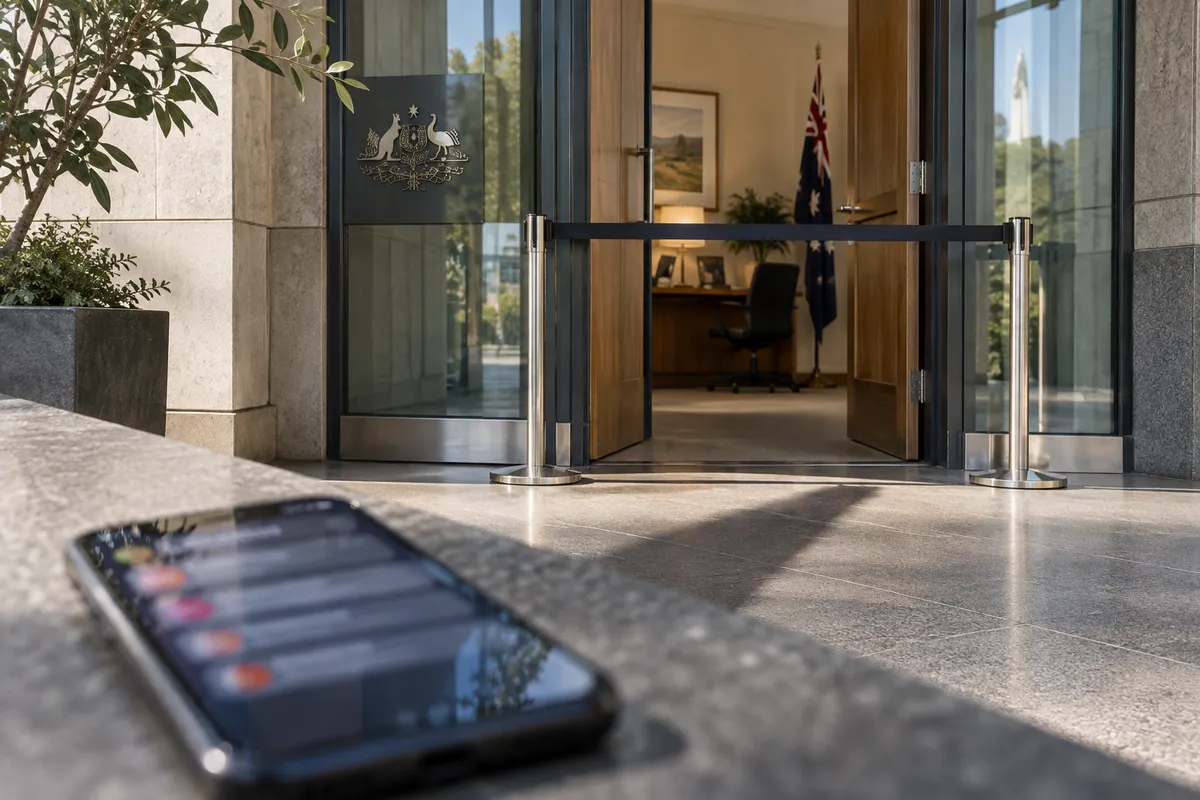
The reporting describes MPs struggling to balance safety with being accessible to the public. Local MPs often hold street stalls, community events and open office hours. That is how many Australians raise concerns directly with the person who represents them.
After the attack on Haines, MPs have reportedly been receiving emergency safety briefings. The issue, in the framing of the coverage, has moved from abstract concern to immediate risk to democracy.
The trade-off is real. More security can make events feel guarded and distant. Less security leaves MPs and the people around them exposed. There is no option that removes all risk and keeps everything open.
What the public stands to lose
If MPs pull back from public contact because it feels too dangerous, the people who lose out are everyday constituents. Access to an elected representative is one of the simplest ways ordinary people can be heard. Fewer open events and more barriers would mean fewer chances for that.
This is our analysis, but it follows from the dilemma the reporting describes: safety measures and public accessibility pull in opposite directions, and the cost of leaning too far either way is borne by the public as well as politicians.
What you can do
You don't need to run a campaign to change the climate. Small habits add up:
- Pause before sharing. If an image or post is designed to make you furious, ask who benefits from your anger.
- Criticise the policy, not the person's safety. You can be blunt and still stay on the right side of the line.
- Report threats. Threatening content on social platforms can be flagged, and serious threats can be reported to police.
- Keep showing up. Attend local events, write to your MP, and ask questions. Public access survives when people use it respectfully.
The most useful step is the simplest: before you post or share something about a politician, check whether it argues with them or just points a crowd at them.