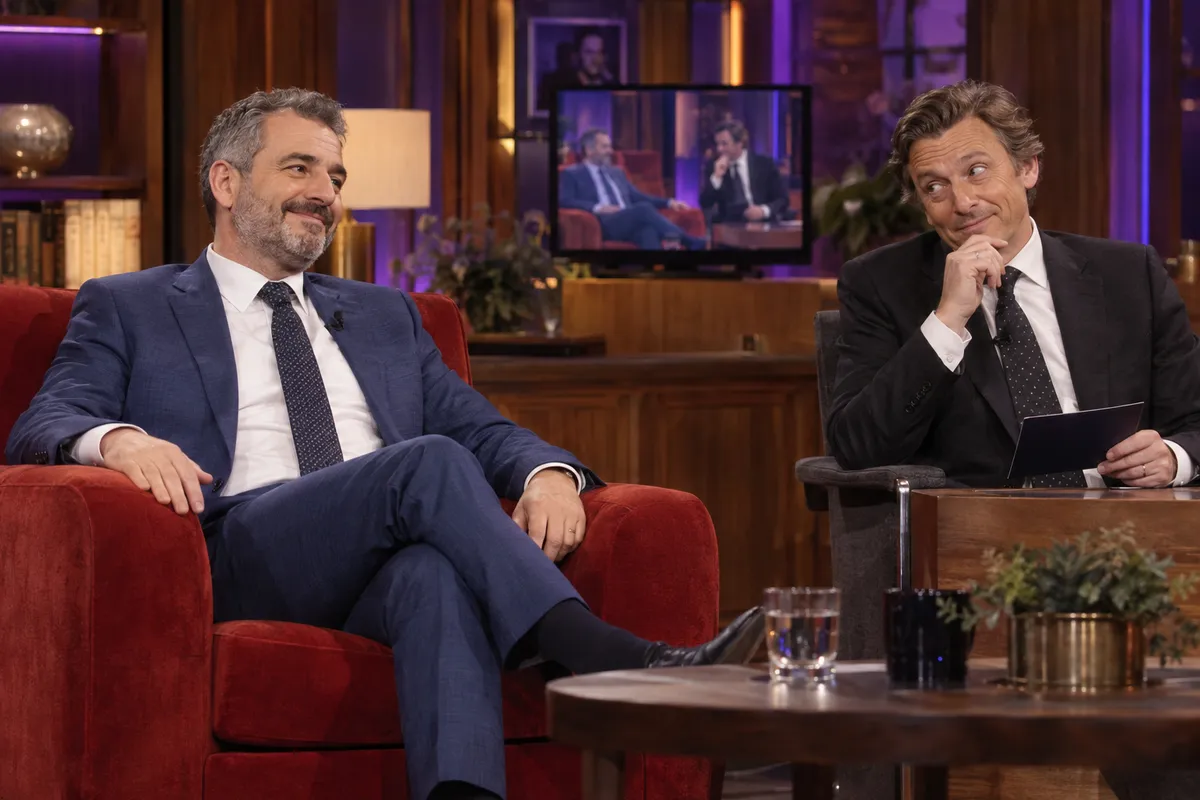
"SNL U.K." opened its latest episode by poking fun at Prince William's surprise appearance on "The Graham Norton Show," according to Variety. By the end of this piece, you'll know the simple mechanics that make a cold open like this work, and you'll be able to spot them the next time a sketch makes you laugh.
What happened in the cold open
Per Variety, the sketch spoofed the week's biggest British TV moments through a single device: Andy Burnham and Steve Rotheram watching "Celebrity Gogglebox." From that sofa, the show sent up Prince William on "The Graham Norton Show," "The Celebrity Traitors," and "Bake Off." It also included a gag about a future cyberattack involving Burnham.
I can only vouch for what Variety reported, so I won't describe individual jokes beyond that. The structure, though, tells you plenty.
The trick: borrow a format everyone already knows
The smartest choice here is the frame. "Gogglebox" is a show about people watching television and reacting to it. Putting two public figures on that sofa gives the writers a ready-made excuse to jump between topics without a plot.
This is a shortcut your brain appreciates. You already know the rules of the format, so you don't spend any effort learning them. All your attention goes to the part that's new: the twist.
Why that makes jokes land faster
Comedy depends on a gap between what you expect and what you get. A familiar format sets your expectation instantly. Then the sketch can bend it. Without the shared template, the writers would burn precious seconds on setup.
Why a fresh news moment is the best raw material
A spoof of Prince William's Graham Norton appearance only works if you saw, or at least heard about, the real thing. That's the advantage of a rapid-response show: the audience's memory is still warm.
It also explains why Variety framed the sketch around that week's TV chatter. Satire about last month's moment feels like a history lesson. Satire about this week's moment feels like a shared joke.
The compare-and-contrast effect
When you watch a parody after the original, your brain quietly runs a comparison. You notice what was exaggerated, what was left out, and what was invented. The laugh comes from spotting the distance between the real person and the cartoon version. That's a small act of analysis, and it feels rewarding.
Why British TV is such good satire fodder
The sketch touched four very different formats: a chat show, a celebrity competition, a baking contest, and a reality-viewing programme. These are widely watched, instantly recognizable, and full of habits that are easy to exaggerate: the sofa, the format's catchphrases, the tone of the host.
Here's my take, not Variety's: when TV formats are this recognizable, parody needs only a small nudge to work. The more rigid the format, the easier it is to break.
Politicians as punchlines
The choice of Burnham and Rotheram as the viewers is a good example of politics and entertainment colliding. Variety notes the continued crossover between the two worlds. Public figures who are already familiar to an audience can carry a sketch without introduction, and they give the writers a second layer of jokes on top of the TV references.
The cyberattack gag about a future Burnham, as Variety describes it, shows the other common move: take a real person and project them forward into an absurd scenario.
How to spot the craft yourself
Next time you watch a sketch, check for these four things:
- The frame. What familiar format is the sketch borrowing?
- The timing. Is it riffing on something from the past few days?
- The exaggeration. Which single trait of the real person or show is being blown up?
- The jump. How does it move between topics without losing you?
Once you start looking, you'll see the same toolkit in almost every cold open.
The takeaway
When a joke lands, ask what shared knowledge it relied on. The answer usually explains the laugh, and it shows how much you already know without trying.