
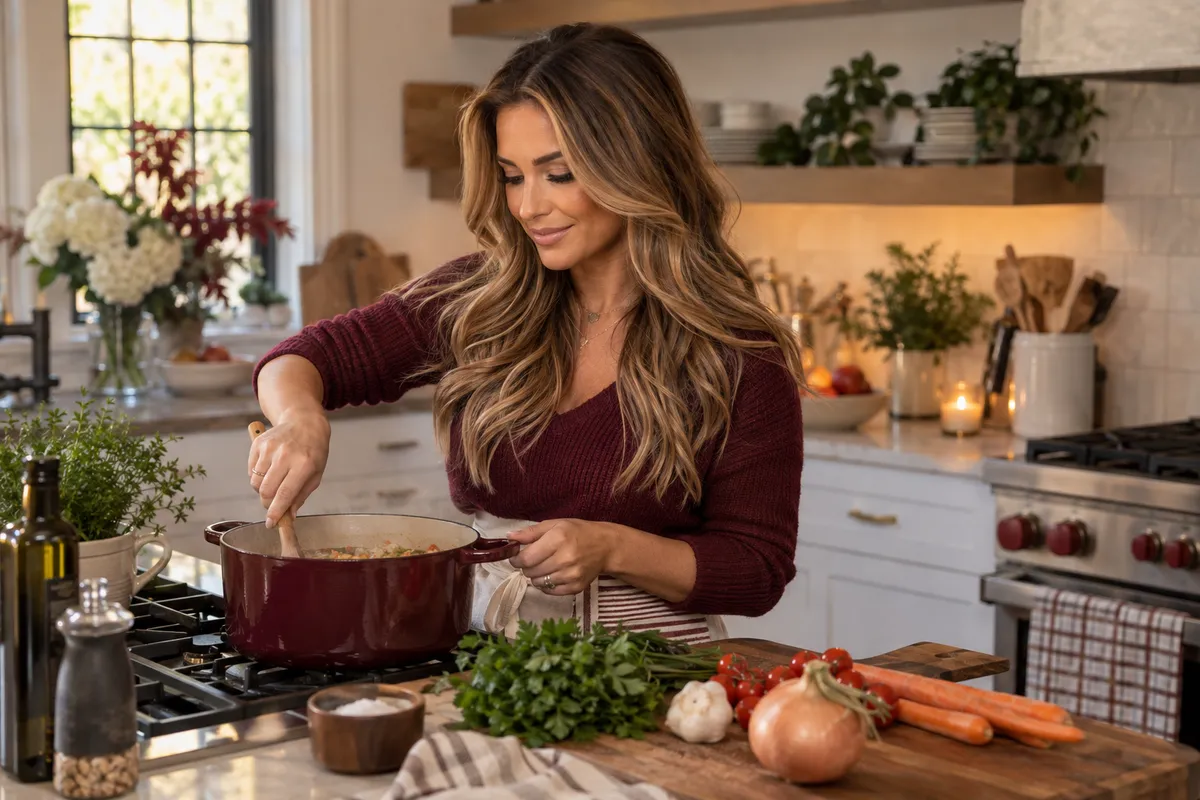
Country singer and author Jessie James Decker has a cooking lesson she says she learned the hard way: the food you make is shaped by the emotions you bring into the kitchen. Her new cookbook, "The Secret Sauce," is built around that idea, treating food as a reflection of care, mood, and connection, according to Fox News.
That's a claim worth poking at. Does your mood really change what ends up on the plate? Here's a practical way to think about it, and a few ways to test it yourself.
What Decker is actually saying
Per Fox News, Decker's recipes are family-focused, and her philosophy is that cooking carries the feelings of the person doing it. The reporting doesn't include lab results or a scientific study, so treat this as a personal philosophy rather than a proven mechanism. It's a cook's observation, not a research finding.
Still, it's an observation that most home cooks recognize. A dinner made in a rush while you're irritated tends to feel different from one made slowly on a calm Sunday. The interesting question is why.
Why mood plausibly changes the food (our take)
Nothing below comes from Decker or Fox News. It's our own reasoning about how the idea could work in practice, and it doesn't need anything mystical.
Stress makes you sloppy
When you're frazzled, you skip steps. You don't taste as you go. You crank the heat to save time. You forget to read the recipe through first. Each shortcut changes the result in a way you can actually taste.
Attention is an ingredient
Seasoning, timing, and browning all reward a cook who's watching the pan. A distracted cook burns the garlic. A present one catches it at golden.
Mood changes how the meal is received
A meal served with some care tends to be eaten differently than one slapped down in frustration. Same food, different table. That's the "connection" side of Decker's message: the meal is partly about the people sharing it.
Three ways to test it at home
You don't have to take anyone's word for it. Try this over a week.
- Cook the same simple dish twice. Make something you know well, like scrambled eggs or pasta with sauce. Make it once when you're rushed and once when you've given yourself time. Compare.
- Use a reset ritual. Before you start, wash your hands, read the recipe through, and set out your ingredients. It takes two minutes and gives your head a clean start.
- Taste at every stage. It's the easiest habit to build, and it forces the kind of attention that tends to improve results no matter your mood.
Family recipes as storytelling
Decker's focus on family dishes points to another reason this idea resonates. Recipes passed around a household carry memories: who made it, when, and for whom. Cooking one of those dishes isn't just following instructions, it's repeating a small piece of a story.
If you want to try this, pick one dish your family already loves. Write down how you make it, including the odd habits, like a pinch of something you never measure. Next time, cook it with someone else in the kitchen. That's the "connection" part of Decker's message in practice.
Why comfort-driven cooking keeps landing
Celebrity cookbooks and approachable home cooking keep drawing readers who want easy meals with a personal story attached. Decker, a singer, author, and family lifestyle figure, sits right in that space. You don't have to buy her book to borrow the idea, though. It costs nothing to try.
The takeaway
Next time you cook, take thirty seconds before you turn on the stove to notice how you feel. If you're tense, slow down, taste more, and give the food your full attention. Then see whether dinner tastes different.