
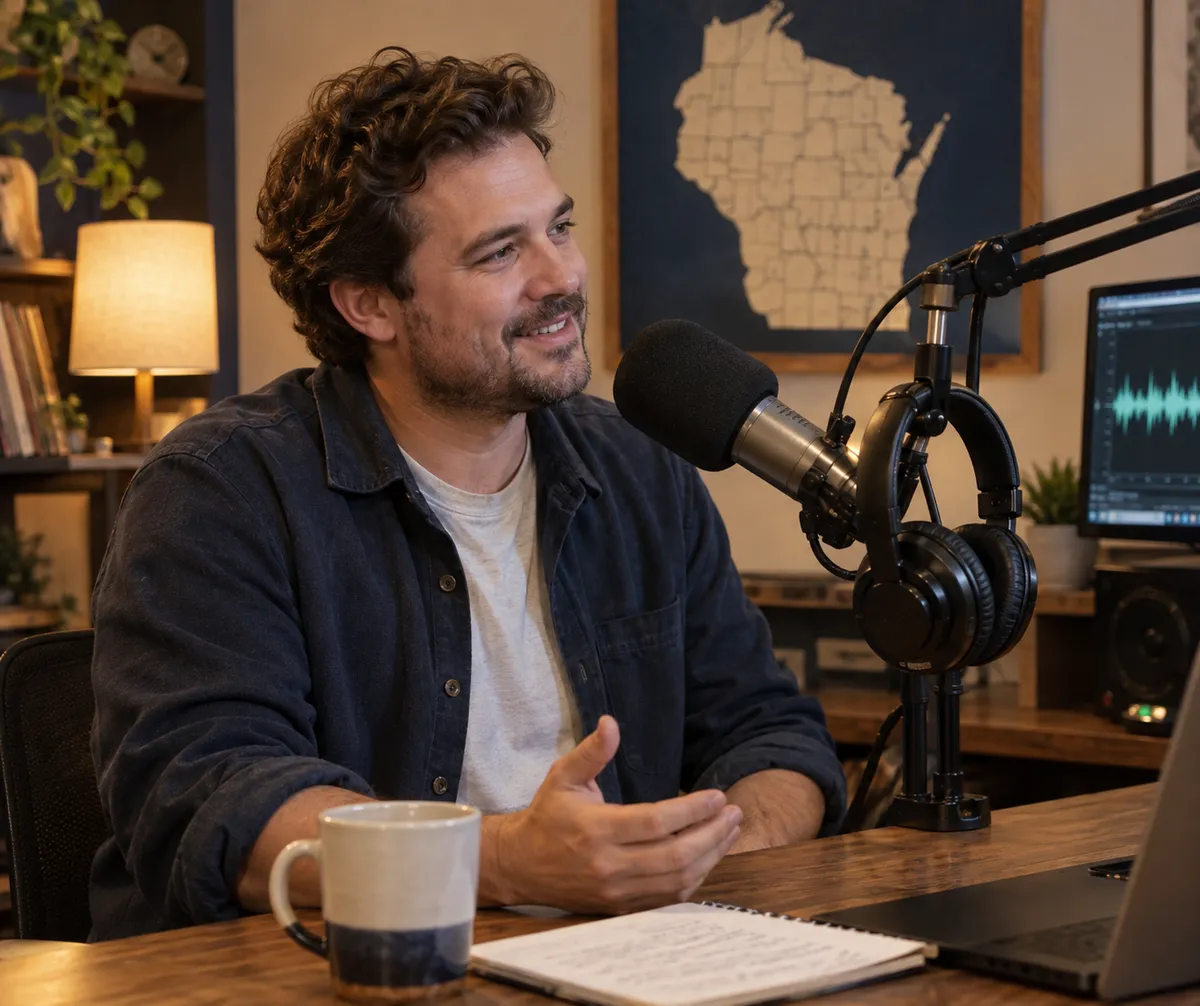
Politics can feel like a room where everyone is already shouting. So why does a joke about your own state's quirks make the same subject easier to sit with? NPR's Sacha Pfeiffer recently put a version of that question to comedian and former journalist Charlie Berens, whose comedy blends political satire with a distinctly Wisconsin sense of humor, per NPR.
This piece uses that interview as a starting point to explain why local, place-based comedy can make civic topics feel approachable, and how you can spot (or use) the same trick yourself.
A caveat up front: the details available from the NPR segment are limited. What follows sticks to what NPR reported about Berens and treats the broader explanation as analysis, not as claims he made.
The setup: a journalist who became a comedian
NPR describes Berens as a comedian and former journalist. That pairing is worth pausing on. Journalists spend their days learning how government works, who the players are, and what actually matters in a story. Comedians learn what makes a room laugh.
Per NPR, Berens' comedy blends political satire with regional humor and local identity. In other words, the politics and the place arrive together. You aren't getting a generic take on national headlines. You're getting Wisconsin politics, told in a Wisconsin voice.
Why a shared place lowers the temperature
Here is the analysis, and it is ours, not Berens'. Political arguments often fall apart because people start from different tribes. Place is a different kind of tribe. If you grew up somewhere, you share small, harmless references with your neighbors: how people talk, what they eat, how they act at a gas station or a family gathering.
Those references act like a handshake. Before any political point lands, the audience has already thought, "This person gets where I'm from." That feeling of recognition can make listeners more willing to hear a joke about something they might otherwise tune out.
That is the idea behind several angles in the NPR coverage: local humor can make politics less exhausting, and regional identity can be a powerful niche for creators.
Three things that make place-based satire work
These are observations about the craft, drawn from the general approach NPR describes rather than from quotes by Berens.
1. Specificity beats generality
A joke about "politicians" could be about anyone, so it lands with no one. A joke rooted in one state's habits, accents, and institutions feels true to the people who live there. Specific details signal that the writer paid attention.
2. The joke is on the shared culture, not just the other side
When regional humor teases "us" as well as "them," it avoids sounding like a lecture or a partisan rant. Self-aware comedy tends to invite people in rather than push them away. That is why the "Midwest nice" style of satire, a friendly, good-humored tone, has become a recognizable creator playbook.
3. Civic topics become characters and scenes
State politics can feel abstract: budgets, elections, rules. Turning them into sketches gives them faces and situations. You remember a scene far longer than a policy summary.
What this means if you follow politics
You don't need to be a comedian to use the idea. A few practical moves:
- Notice your own filter. If a political joke lands for you, ask whether it's the point or the familiarity that landed. Often it's both.
- Start local. City council, county, and state questions are easier to follow when they connect to places you actually know.
- Check the facts separately. Satire is a doorway into a topic, not a replacement for reporting. Laughing at something is a good reason to look it up, not a reason to stop there.
What this means if you make things
The takeaway for writers and creators, which the NPR coverage frames as a content opportunity: regional quirks, accents, and shared local references can unpack politics without sounding preachy. The niche is narrow, but narrow is the point. A small, well-understood community can be a more loyal audience than a vague, huge one.
The surprising takeaway
We tend to assume that making politics less intense means making it less specific, sanding off the edges until it offends no one. The Berens approach, as NPR describes it, suggests the opposite. The more rooted the humor is in one place, the more universal the feeling can become. Someone far from Wisconsin can still recognize the experience of hearing their own hometown quirks turned into a punchline.
So the next time politics feels like too much, try finding the version of it that's closest to home, and look for the person who can make you laugh about it.