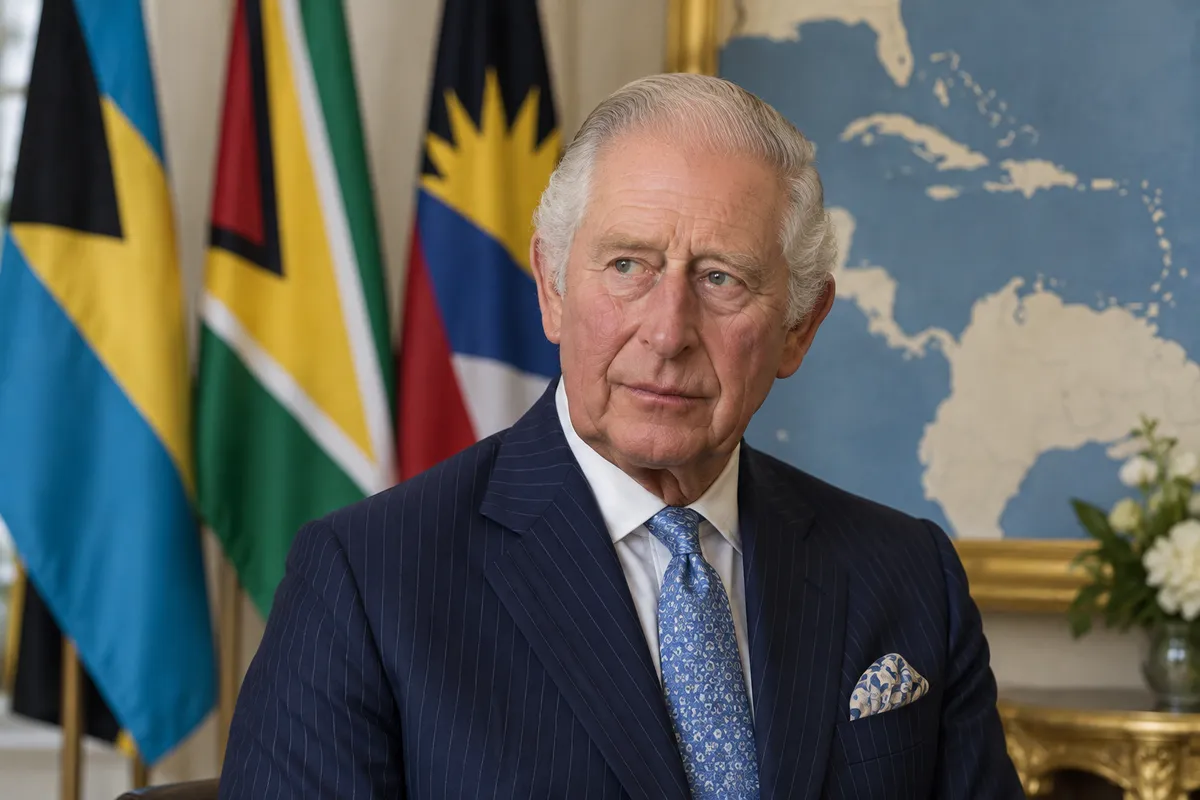
King Charles III is set to visit three Caribbean countries in nine days: the Bahamas, Guyana, and Antigua and Barbuda. On paper, it's a meticulously planned trip. In practice, the BBC reports it could be framed as one of the biggest risks of his reign. By the end of this article, you'll understand why a trip that looks ceremonial is now closer to a political stress test.
What's actually on the schedule
The facts are simple. Three countries. Nine days. The BBC describes the visit as meticulously planned but "not without jeopardy." The itinerary is the easy part. The hard part is what the visit means to the people watching it.
Why a ceremonial visit isn't just ceremonial
A royal tour looks like handshakes, flags and formal dinners. But every moment is also a message, and that's where the risk comes from. According to the BBC's reporting, the trip lands in the middle of several live debates:
- Calls for reparatory justice linked to slavery
- Questions about whether the Crown should apologise
- Republicanism, meaning the push in some countries to replace the monarch as head of state
- The monarchy's future role in the Commonwealth
A royal tour can't sidestep any of these. Even saying nothing becomes a statement, because audiences at home and abroad will read the silence.
The reparations problem
Here is the bind, based on the BBC's framing. Caribbean nations are increasingly pushing for reparatory justice and reconsidering their ties to the Crown. A visiting monarch is the most visible symbol of that relationship.
That leaves Charles with a difficult set of choices. Address the history directly, and he may be seen as going further than his role allows or than the British government wants. Avoid it, and he risks looking out of touch. The question the BBC's angle raises is whether he can modernise the monarchy's image without offering an apology. That's a question, not a settled answer, and the trip itself may help shape it.
The lesson of 2022
Charles isn't the first royal to face this. The BBC's brief points to the criticised 2022 Caribbean tour by William and Catherine as a cautionary precedent. That visit drew criticism, and it shows how a carefully choreographed tour can still backfire when the optics clash with the political mood on the ground.
The takeaway is that planning alone doesn't protect a tour. Staging can be flawless and still land badly if it ignores what local audiences are actually debating.
Why the stakes reach beyond one trip
The visit also arrives while royal family distractions at home compete for attention, per the BBC. That matters because a monarch's overseas work is partly about proving the institution still has a purpose.
The larger stakes are about the Commonwealth. If more nations move toward republicanism, the question becomes what the monarchy's role in that group looks like. How Charles handles this trip could shape perceptions of his reign and of Britain's relationship with its former colonies. That's an assessment of influence rather than a prediction of what will happen, and the outcome is open.
How to read the coverage
When the tour begins, a few things are worth watching. They're our suggestions for reading the news, not predictions:
- What is said about history. Look at the exact wording of speeches, and whether it acknowledges the past, apologises, or avoids the subject.
- How local leaders respond. Their reaction tells you more than the ceremony does.
- What the images show. In 2022, the optics became the story, so pay attention to how events are staged.
- What's left unsaid. Omissions often draw as much comment as statements.
The takeaway
Next time you see a royal visit on the news, don't judge it by the pageantry. Watch the words, the reactions and the gaps, because that's where the real test is happening.