
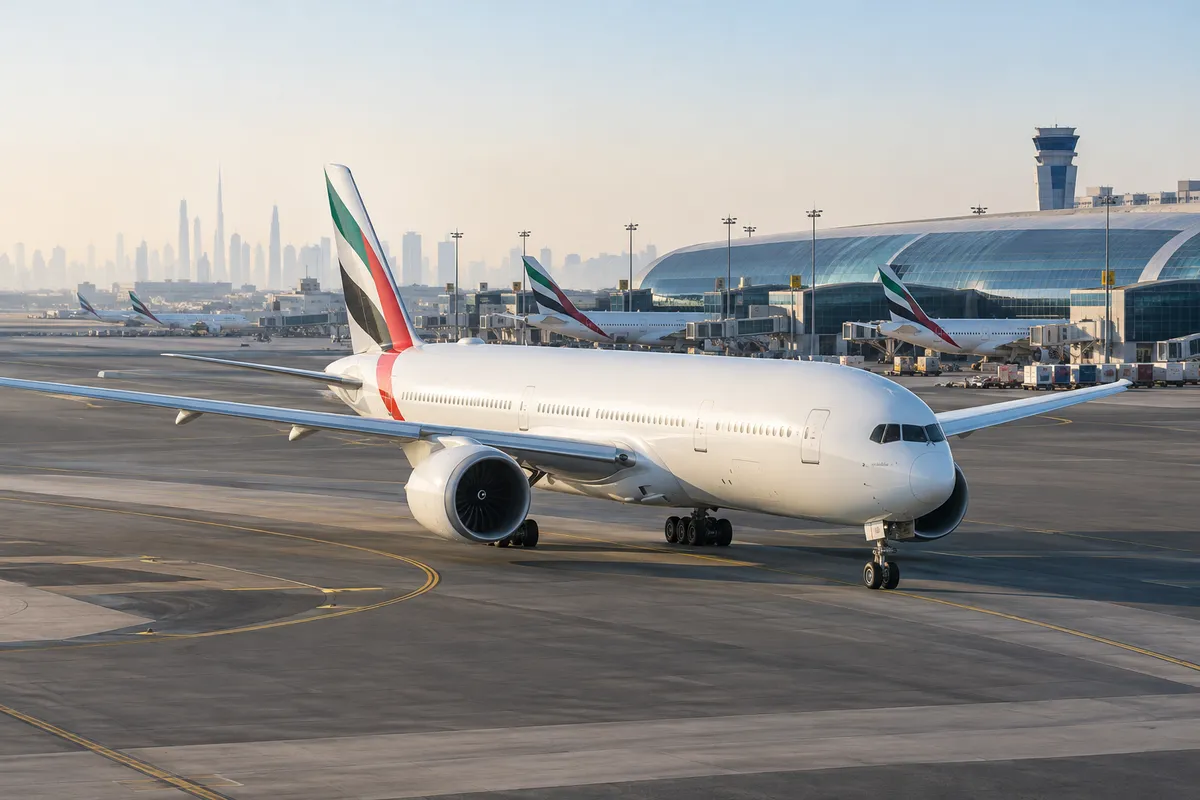
Emirates is planning to expand its U.S. footprint as new, more fuel-efficient aircraft arrive in the coming years, according to The Points Guy. The report doesn't name specific new cities or dates, so this isn't a route announcement. But it points to something worth understanding: airlines don't pick routes first and planes second. Very often, the plane decides what's possible.
By the end of this article, you'll know why a new aircraft can open up a new flight, what to watch for if you fly to or from the U.S., and which claims are confirmed versus still guesswork.
What has actually been reported
Per The Points Guy, Emirates is looking at growing its presence in the United States, with fleet modernization as the key lever. The airline is expected to add capacity and efficiency as next-generation planes join its fleet, and that could mean new routes.
That's the full confirmed picture. Which U.S. cities, how many flights, and when are all open questions in the material reported so far. Anything beyond that is analysis, and we'll label it as such.
Why a plane can decide a route
A long-haul flight is a balancing act between fuel, passengers, and cargo. Fuel is heavy, and the farther you fly, the more of it you have to carry, which leaves less room for paying customers. A route that loses money on an older, thirstier aircraft can become profitable on a more efficient one.
Think of it like a road trip in two cars. Both can make the drive, but one burns far less gas. Over a very long trip, that difference decides whether the journey is worth making at all.
That's why "more fuel-efficient planes" is more than an environmental talking point. It's also a business tool. Burning less fuel per seat can make thinner routes viable, such as cities that don't have enough demand to fill a huge jet every day.
What this suggests for smaller U.S. cities
This part is our reasoning, not Emirates' announcement. If efficiency improves, an airline can fly to places that wouldn't justify its largest, most expensive-to-run aircraft. That could mean more mid-sized U.S. markets get a look. Nothing in the reporting confirms that, so treat it as a reasonable thing to watch rather than a promise.
Why Emirates wants more US flights now
Long-haul travel demand remains strong, and Gulf carriers are competing hard for premium international passengers. The U.S. is a big market for exactly that kind of traveler: people willing to pay more for a long flight that's comfortable.
Dubai is the other half of the story. Emirates routes its passengers through a hub in Dubai, which connects travelers between continents. A new U.S. gateway doesn't just serve people who want to visit Dubai. It also feeds passengers onward to places beyond it. That's why adding one U.S. city can matter more than the flight count suggests.
What to watch if you're a traveler
New aircraft could reshape which U.S. cities get nonstop service to Dubai, and could improve the passenger experience on major routes. Here's how to keep an eye on it without obsessing.
Watch for route announcements
Airlines typically publicize new routes ahead of time, and tickets go on sale after that. If you live near a city without nonstop Dubai service, it's worth setting a fare alert and checking airline news now and then. Nothing has been confirmed for any specific city.
Check which plane flies your route
Before you book a long-haul ticket, look at the aircraft type listed for your flight. Newer planes tend to come with updated cabins, and the aircraft can matter as much as the airline name. Booking tools usually show the aircraft type, and it can change, so recheck closer to departure.
Points and miles travelers: stay flexible
New routes can change what's available when you redeem miles, since a new nonstop can mean new seats to book. The reporting doesn't say anything specific about award pricing or availability, so there's no reason to rush anything. If you collect points, note which U.S. cities get service first and compare options then.
How Emirates stacks up
The competitive picture is simple even if the details aren't public: Gulf carriers are competing hard for premium international passengers, and U.S. airlines are part of that fight on the same routes. More capacity on a route generally gives travelers more choices, and competition often shows up in fares and cabin quality. Whether that happens here depends on decisions that haven't been announced yet.
The surprising takeaway
When you see "new planes" in an airline headline, it's easy to read it as a story about nicer seats. The deeper story is about physics and money: less fuel burned per seat changes which flights are worth flying. That's how an engine upgrade can end up changing the map.
So the next time an airline talks about fleet renewal, ask one question: which route does this make possible that wasn't before? That's usually where the real news is hiding.