
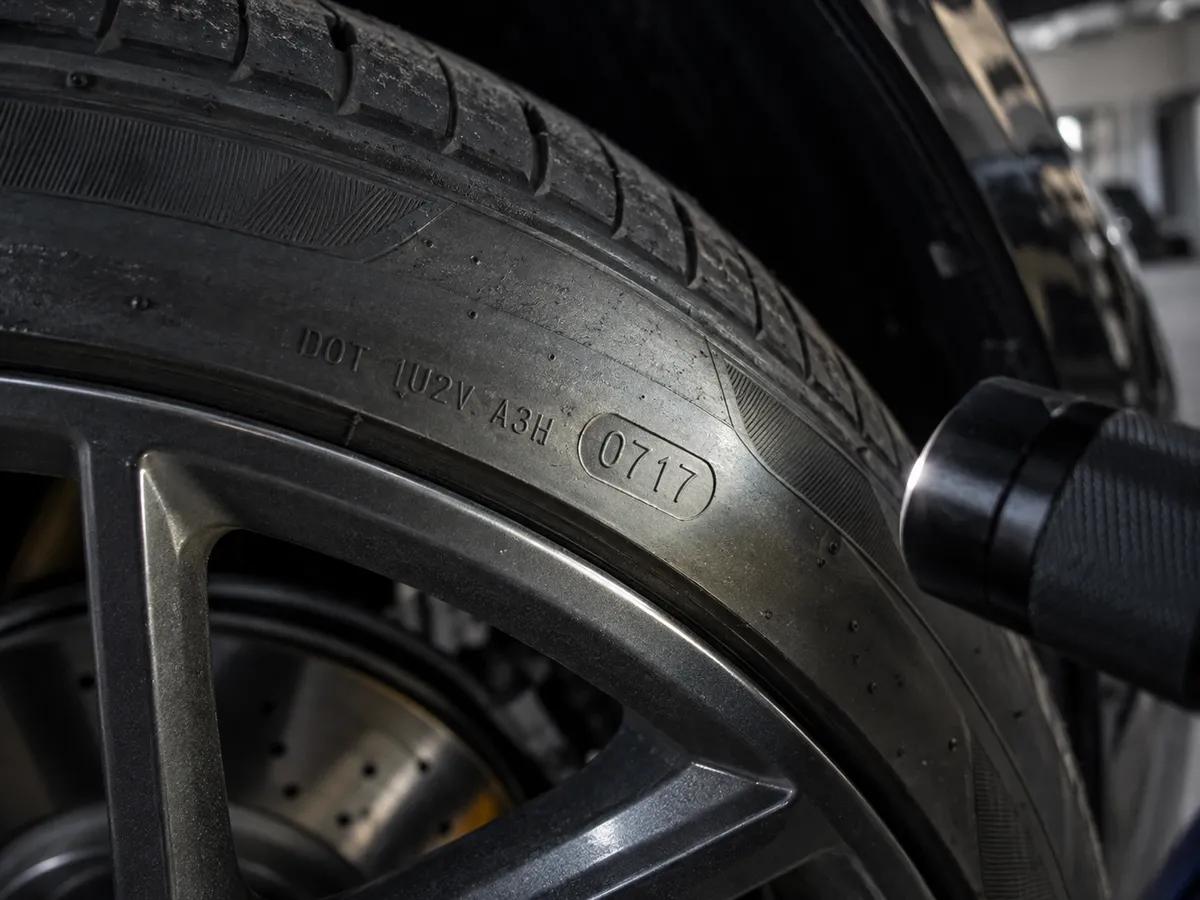
A Utah driver recently bought a 2016 Mercedes-AMG C63 S with a very low odometer reading, then looked closely at the tires. According to Motor1, they were stamped from early 2017. That detail did two things at once: it backed up the car's low-mileage story, and it raised a safety problem. By the end of this article, you'll know how to read the date code on any tire, what it can tell you about a used car, and why it matters even when the tread looks fine.
The Tire Date Code, Decoded
Every tire has a string of characters stamped on the sidewall. The part you want is the last four digits of the code that begins with "DOT." Those four digits are the date of manufacture.
- The first two digits are the week of the year.
- The last two digits are the year.
So a code ending in 0817 means the tire was made in the eighth week of 2017, roughly late February. A code ending in 4522 would mean week 45 of 2022.
The date code is sometimes printed only on one side of the tire. If you don't see it on the side facing out, check the inner sidewall, or ask to look with the car on a lift.
Why Old Tires Can Be Dangerous Even With Good Tread
Tread depth is the thing most people check, and it's the thing that can fool you. A tire that has barely been driven can still be old, and age is its own risk. Rubber is not permanent. As the reporting on this Mercedes explains, aging tires can become unsafe even when they look nearly new, which is why the date stamp matters more than the surface appearance.
In the Utah case, the car's tires dated to early 2017 and the purchase happened roughly a decade after the car was built. Those tires were far older than anyone would want underneath a high-performance sedan. That is the surprise of the story: the same low-use pattern that makes a car attractive can leave it with parts that have quietly aged out.
Low Miles Does Not Mean Problem-Free
A car with 31,000 miles after about ten years has been driven very little. That's appealing, and used performance cars remain pricey, so buyers chase these deals. But low mileage trades one kind of wear for another. Parts that fail from use last longer, while parts that fail from time and sitting don't get a free pass.
Tires are the clearest example because they're cheap to check and expensive to ignore. If you buy a low-mileage car, budget for a fresh set. On a performance model, that is a real cost, so it belongs in your negotiation rather than coming as a surprise after you've signed.
Tire Age as a Clue to Mileage Honesty
Here's the useful twist. Tire dates can help you judge whether an odometer reading makes sense. In this Mercedes, tires stamped from early 2017 on a 2016 car fit the low-mileage story: the tires were likely original or close to it, which is what you'd expect if the car hadn't been driven much.
Now flip it around. If a car claims 31,000 miles but wears a set of tires that is clearly much newer, that doesn't prove anything on its own, since owners replace tires for many reasons. But it's a prompt to ask when and why they were replaced, and whether service records back up the story. As Motor1 framed the question, tires can be one clue about whether the mileage is legitimate. Treat it as a clue, not a verdict.
A Quick Checklist Before You Buy a Low-Mileage Car
When you're looking at a used performance car that seems like a steal, spend five minutes on these checks:
- Read all four tire date codes. Check each tire, including the spare if there is one. Mismatched dates are worth a question.
- Compare tire age to car age. Original-era tires on a decade-old car mean you're replacing them.
- Look at the whole story. Do the tires, interior wear, and service records all agree with the odometer?
- Ask about replacement history. If the tires are newer than expected, ask for the receipt.
- Price in the fixes. Add a set of tires and other age-related maintenance to the asking price before deciding it's a bargain.
The Takeaway
Before you hand over money for any low-mileage car, crouch down and read the four digits on the tire. It takes under a minute, and it can tell you whether the odometer story holds up and whether your first purchase after the car is a set of tires.