Every fall, monarch butterflies in Iowa fuel up on nectar from late-blooming wildflowers, then set off for Mexico. Scientists still can't say exactly which routes they take or how weather shapes the trip. By the end of this article, you'll know how researchers are trying to close that gap, and what you can do to help.
The Study: 100 Monarchs, One Very Light Tag
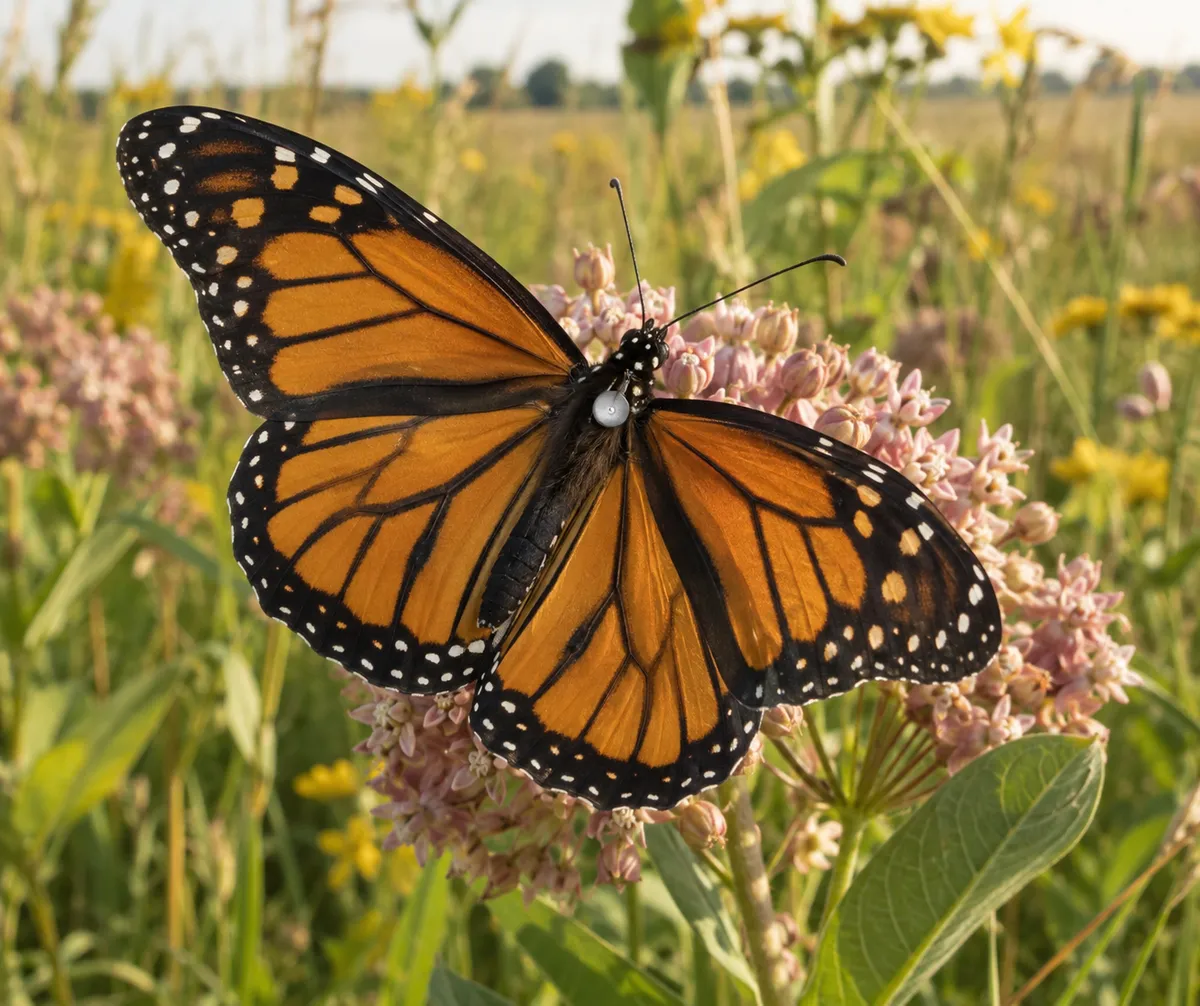
Per Phys, Iowa State researchers are monitoring 100 monarch butterflies on their fall migration to Mexico. They use BlūMorpho tracking tags, which Phys describes as the lightest available. Weight matters here because a butterfly has to carry the tag across a long journey.
The goal is to fill what the report calls critical knowledge gaps: the pathways monarchs take, and how weather affects their journey.
Why Tracking Beats Guessing
For an insect this small, following individuals over a long distance is hard. The tags allow real-time tracking, which Phys says now makes it possible to answer long-standing conservation questions. Instead of piecing together a route from scattered sightings, researchers can watch what individual butterflies actually do.
That matters most for the weather question. The trip takes roughly eight weeks, and tracking lets researchers compare how conditions along the way relate to each butterfly's progress.
The Big Question: Does How a Monarch Is Raised Matter?
The study also compares monarchs raised under different conditions with wild-caught ones. The aim is to find out whether rearing practices affect survival and navigation.
Many people raise monarchs by hand, so this question has real stakes. If butterflies raised one way navigate or survive worse than others, that could change the advice given to well-meaning hobbyists. The study doesn't have results to report yet, so the answer is still open. The design, though, is built to test the question directly rather than rely on assumption.
Why Iowa Is in the Spotlight
The eastern North American monarch population has declined by up to 80%, according to the report. The Midwest, and Iowa in particular, is crucial for monarch production, since many of the butterflies that overwinter in Mexico originate there.
Iowa has already put work into habitat: more than 690,000 acres have been established since 2015. Tracking data could help show where that restoration effort matters most.
How You Can Help
The research ties into public participation through the Project Monarch app, which lets everyday people take part in monarch research. Beyond the app, one simple step is planting milkweed on your porch or in your yard.
The fall nectar part of the story matters too. Monarchs refuel on fall-blooming wildflowers before leaving, so late-season blooms are part of what gets them to Mexico.
The Takeaway
A butterfly lighter than most things you've ever held is now carrying a tracker across a continent. Take one action this season: plant something that blooms in fall, and download the Project Monarch app to see how you can join in.